How to Choose Smart Thermostats: A Complete Buying Guide for 2026
As an Amazon Associate we earn from qualifying purchases. Links on this page are affiliate links.
This smart thermostat buying guide helps you select the right heating and cooling controller for your home. We compare 8 models based strictly on their published specifications. You will learn how to match programmability, connectivity, and smart home compatibility with your existing HVAC system. The list covers options ranging from basic Wi-Fi scheduling to advanced learning algorithms with remote sensors. Each product was chosen for its clear technical attributes and practical fit for specific user needs. You can decide between simple programmable units and energy-star certified devices with color displays. The guide walks you through wiring requirements, size constraints, and ecosystem integration. You will understand what each spec means for your daily comfort and energy usage. Our selections prioritize reliability and feature clarity over marketing claims. This approach ensures you find a device that fits your home’s technical requirements. You can make an informed choice without guessing about hidden costs or unverified performance. The recommendations focus on what the hardware actually delivers. You will see how dimensions, weight, and model numbers matter for installation. This practical overview simplifies the complex world of home climate control.
Our top pick: Google Nest Smart Wi-Fi Thermostat.
Key Specs for Choosing Thermostats
Smart home compatibility
Your thermostat must speak the same language as your existing ecosystem. Some models support Alexa, Google Home, and Apple HomeKit, while others are limited to one platform. If you use multiple assistants, check the attribute list carefully. The Google Nest Learning Thermostat supports Alexa, Google Home, and Apple HomeKit, making it flexible for mixed households. Limiting your choice to a single platform can restrict future automation routines. You want a device that integrates seamlessly with your lights, locks, and sensors. If you plan to expand your smart home later, broad compatibility is essential. Verify the supported platforms before buying to avoid connectivity gaps.
- List of supported voice assistants
- Matter or HomeKit support
Wiring requirements
Most smart thermostats need a continuous power source, often provided by a C-wire. If your home lacks this wire, you may need an adapter or a different model. The Honeywell Home Smart Color Touchscreen Thermostat explicitly requires a C-wire. This ensures stable operation for color screens and Wi-Fi radios. Models without this requirement often use battery backups or power stealing, which can be less reliable. Check your existing thermostat wiring before purchasing. If you are unsure, look for models that include a power kit. Proper wiring prevents unexpected shutdowns and ensures the smart features function correctly without interruption.
- C-wire required or optional
- Included power adapter details
Display type
The interface affects how easily you adjust settings. Some units use simple LED displays, while others offer color touchscreens. The Honeywell Home model features a color touchscreen for clear visual feedback. The Ecobee Smart Thermostat Essential also includes a color display. A larger, clearer screen helps you read temperatures and menu options quickly. Touchscreens allow for intuitive navigation through complex schedules. Basic models may rely on physical dials or small monochrome screens. Consider your preference for tactile buttons versus digital interfaces. A good display reduces the time needed to make adjustments and improves overall usability.
- Touchscreen or physical buttons
- Color display availability
Certification
Energy Star certification indicates that the device meets specific efficiency standards set by the EPA. The Honeywell Home and Ecobee Smart Thermostat Essential both carry this certification. This label suggests the thermostat can help reduce energy consumption through smart scheduling and sensors. While not a guarantee of savings, it provides a baseline for efficiency. Devices with this certification often include features like occupancy sensing or adaptive recovery. It is a quick way to identify models focused on energy management. If saving power is a priority, look for this badge on the product specifications.
- Energy Star certified label
- Efficiency feature descriptions
Connectivity
Wi-Fi connectivity allows you to control your thermostat remotely via a smartphone app. All listed models support Wi-Fi, enabling remote adjustments and software updates. Without Wi-Fi, you lose the ability to check temperatures while away or modify schedules on the go. Ensure your home network is stable, as dropped connections can disrupt smart features. Some models may also support Bluetooth for initial setup, but Wi-Fi is essential for daily smart functions. Check the connectivity attributes to confirm the standard used. Reliable internet access is necessary for the thermostat to communicate with the cloud and your devices.
- Wi-Fi standard support
- Remote app access details
Programmability
Programmability defines how you set heating and cooling schedules. Some models are fully programmable with multiple periods per day. The Google Nest and Ecobee models offer programmable features. This allows you to create custom routines for weekdays, weekends, and special occasions. Learning models automate this process by observing your habits. Basic programmable thermostats require manual input for each schedule change. Choose based on your desire for automation versus manual control. Flexible programming helps align HVAC operation with your daily routine for comfort and efficiency.
- Number of daily periods
- Learning vs manual modes
System compatibility
Thermostats must match your HVAC system type, such as forced air, heat pump, or radiant. The Honeywell Home model is noted for forced air and heat pump systems. Using an incompatible thermostat can damage equipment or fail to control it. Check the supported system types in the product attributes. Some models require additional hardware for multi-stage heating or cooling. Ensure the thermostat supports your system's voltage and stage count. Mismatched compatibility leads to poor performance or installation failures. Verify your system details before selecting a device.
- Supported HVAC system types
- Voltage and stage support
Types of Smart Thermostats
Basic Programmable Wi-Fi Models
These units offer scheduled heating and cooling via Wi-Fi connectivity without complex learning algorithms. You get reliable remote control through a smartphone app. The Google Nest Thermostat (Sand) is a practical example for users already in the Google ecosystem. It features a compact design measuring 3.31 inches in diameter. This type suits those who want energy-saving schedules without advanced hardware. The main trade-off is the lack of room sensors or premium displays. You rely on the thermostat’s internal sensor for temperature readings.
Learning Thermostats with Sensors
These devices adapt to your daily routine to adjust temperatures automatically. They often include remote sensors to monitor comfort in specific rooms. The Google Nest Learning Thermostat (4th Gen) supports Alexa, Google Home, and Apple HomeKit. It measures just 0.15 inches thick, allowing for a sleek wall mount. This type fits homeowners seeking automated efficiency and multi-room accuracy. The trade-off is a higher price point and steeper installation requirements. You benefit from precise temperature management without manual programming. The included sensor helps balance heat in rooms far from the main unit.
Advanced Smart Thermostats with Air Quality
These models provide robust voice integration and monitor indoor air quality. The ecobee Smart Thermostat Premium includes a SmartSensor for whole-home comfort. It connects via Wi-Fi and supports Alexa for voice commands. The unit is black and measures 4.09 inches wide. This type suits households valuing air quality tracking and multi-room management. The trade-off is the need for a C-wire or power extender. You get detailed insights into your home’s environment. The included sensor allows you to prioritize comfort in occupied rooms over empty spaces.
Common mistakes to avoid
Ignoring C-wire requirements
Check if your HVAC system provides continuous power. Many smart thermostats need a common wire to operate reliably. Without it, the device may shut down or fail to connect. Verify your wiring configuration before purchasing to ensure stable performance and consistent connectivity.
Assuming universal compatibility
Smart thermostats support specific heating and cooling systems. Verify that the device matches your furnace, heat pump, or boiler type. Mismatched hardware can lead to control errors or damage. Review the supported system list in the specifications to confirm your setup works correctly.
Overlooking display readability
Consider how you will view temperature settings daily. Some models feature small screens that are hard to read in low light. Others offer bright, large displays for clarity. Choose a unit with a screen size and brightness level that suits your installation environment.
Neglecting geofencing accuracy
Geofencing uses your location to adjust temperatures automatically. Poor GPS settings or inaccurate radius configurations waste energy. Ensure the app allows you to define precise home boundaries. Test the feature to confirm it triggers correctly when you arrive or leave your property.
Skipping professional installation
Wiring errors can damage your HVAC system or the thermostat. If you are unsure about wire labeling or connections, hire a certified technician. Proper installation ensures safety and optimal functionality. Incorrect wiring voids warranties and leads to unreliable temperature control and connectivity issues.
Quick picks
Our 8 picks

Google Nest Smart Wi-Fi Thermostat
Best for: Google users seeking basic smart control
- Wiring Requirement
- Works without C wire in most homes
- Smart Home Compatibility
- Google Assistant, Matter
- Programmability
- Programmable
- Connectivity
- Wi-Fi
- Dimensions
- 3.31 × 3.31 × 1.07 inches
- Weight
- 4.96 ounces
View on Amazon: Google Nest Smart Wi-Fi Thermostat Affiliate link
This programmable Wi-Fi thermostat helps manage home energy use. It works without a C wire in most homes, simplifying installation. You can control it via the Google Home app or voice commands with Google Assistant and Matter-certified devices. The unit includes HVAC monitoring to alert you to system issues. Its compact design fits standard wall plates, making it a straightforward choice for basic smart home integration.
Pros
- Works without a C wire in most homes
- Compatible with Google Assistant and Matter voice assistants
- Includes HVAC monitoring and maintenance alerts
- Programmable schedules via Google Home app
Cons
- Limited to Google Assistant and Matter ecosystems
- No built-in temperature sensor for remote rooms
- Requires Wi-Fi for full functionality
Good fit if
- You use Google Assistant or Matter devices
- You want a simple programmable thermostat
- Your HVAC system likely works without a C wire
Skip if
- You need Alexa or Siri voice control
- You require remote room sensors
- You want advanced scheduling features
Verdict: Google Nest Thermostat Sand is a practical entry-level option for users already in the Google ecosystem who want basic energy-saving automation without complex wiring.

Google Nest Programmable Wi-Fi Thermostat (Renewed)
Best for: Basic programmable control and voice integration
- Wiring Requirement
- Works without C wire in most homes
- Smart Home Compatibility
- Google Assistant, Alexa
- Programmability
- Programmable
- Connectivity
- Wi-Fi
- Dimensions
- 3.31 × 3.31 × 1.07 inches
View on Amazon: Google Nest Programmable Wi-Fi Thermostat (Renewed) Affiliate link
This Google Nest Thermostat is a programmable Wi-Fi unit designed to help you save energy. It works without a C wire in most homes and supports voice control via Google Assistant or Alexa. The device features an automatic scheduling system that adjusts temperatures when you leave. It is a practical option for users seeking basic smart home integration and energy efficiency without complex wiring requirements.
Pros
- Programmable scheduling via Google Home or Nest app
- Works without a C wire in most homes
- Compatible with Google Assistant and Alexa
- Automatic temperature adjustment when you leave
Cons
- Requires Wi-Fi for remote control and notifications
- Not compatible with heating only, cooling only, or zone controlled systems
- Limited to basic smart features without premium sensors
Good fit if
- You want a programmable thermostat with voice control
- Your HVAC system does not require a C wire
- You use Google Assistant or Alexa for smart home management
Skip if
- You have a heating only or cooling only system
- You need compatibility with systems requiring a C wire
- You want premium features like room sensors or display screens
Verdict: Google Nest Thermostat (Snow) - Wi-Fi is a solid choice for standard HVAC systems needing basic automation. It fits users who value simplicity and energy-saving schedules over advanced hardware features.
Google Nest Programmable Wi-Fi Thermostat
Best for: basic Wi-Fi scheduling in compatible systems
- Wiring Requirement
- C-wire may be required
- Programmability
- Programmable
- Connectivity
- Wi-Fi
- Dimensions
- 3.31 × 3.31 × 1.07 inches
- Weight
- 4.96 ounces
View on Amazon: Google Nest Programmable Wi-Fi Thermostat Affiliate link
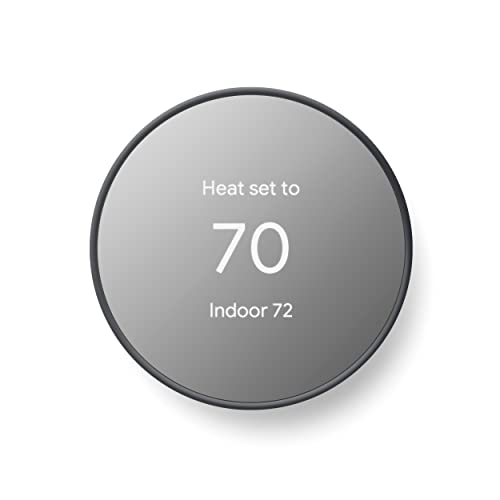
This Google Nest Thermostat is a programmable Wi-Fi unit in charcoal. It measures 3.31 inches square and weighs 4.96 ounces. The T3007ES model connects to your home network for remote control. You must check your existing wiring because a C-wire may be required. It suits users who want a slim, connected device for basic scheduling and remote management.
Pros
- Programmable scheduling features
- Wi-Fi connectivity for remote control
- Compact 3.31-inch square design
- Lightweight at 4.96 ounces
Cons
- C-wire may be required for installation
- Renewed condition rather than new
- No built-in temperature sensor mentioned
Good fit if
- You have a compatible HVAC system with a C-wire
- You want a slim, discreet wall mount
- You need basic programmable scheduling via Wi-Fi
Skip if
- You cannot install a C-wire
- You require a brand-new sealed unit
- You need advanced smart home integration beyond Wi-Fi
Verdict: Google Nest Thermostat Charcoal T3007ES is a compact, Wi-Fi enabled option for homeowners with compatible wiring. It fits users who prioritize a small footprint and basic remote scheduling over premium hardware.

Honeywell Home 5-2 Day Programmable Thermostat
Best for: simple 1 Heat/1 Cool systems without C-wire
- System Compatibility
- 1 Heat/1 Cool, hot water, forced air
- Voltage
- 750 mV
- Wiring Requirement
- No C-wire required
- Programmability
- 5-2 day
- Display Type
- Backlit display
- Dimensions
- 30 × 8 × 6 inches
View on Amazon: Honeywell Home 5-2 Day Programmable Thermostat Affiliate link
The Honeywell Home RTH20B is a battery-powered thermostat designed for 1 Heat/1 Cool systems. It offers 5-2 day scheduling and features a backlit display for clear reading. You can customize display settings and receive air filter reminders. It requires no C-wire, using 2 AA batteries instead. This model suits users with forced air, gas, oil, or electric heating who want basic programmable control without complex wiring.
Pros
- 5-2 day scheduling with non-programmable option
- Backlit display with large screen and clear font
- No C-wire required; powered by 2 AA batteries
- Customizable display settings and air filter reminders
- Extended 32°F low-heat setpoint
Cons
- Limited to 1 Heat/1 Cool system stages
- Battery powered with included batteries not provided
- Does not work with electric baseboard heat (120-240V)
Good fit if
- You have a 1 Heat/1 Cool forced air system
- You want a thermostat that does not require a C-wire
- You prefer basic 5-2 day programming over complex smart features
Skip if
- You need control for multi-stage heating or cooling systems
- You have electric baseboard heat requiring 120-240V compatibility
- You require continuous power without battery changes
Verdict: Honeywell Home RTH20B Programmable Thermostat fits homeowners with simple 1 Heat/1 Cool systems who need reliable scheduling without the hassle of C-wire installation. It is a solid choice for those who value clear displays and basic programmability over advanced smart home integration.

Ecobee Smart Thermostat Essential Wi-Fi
Best for: Users wanting a color display and broad smart home compatibility
- System Compatibility
- 24 VAC HVAC equipment
- Voltage
- 24 VAC
- Wiring Requirement
- PEK for no C-wire (sold separately)
- Smart Home Compatibility
- Apple HomeKit, Google Assistant, Alexa
- Programmability
- Programmable
- Display Type
- Color touchscreen
View on Amazon: Ecobee Smart Thermostat Essential Wi-Fi Affiliate link
The ecobee Smart Thermostat Essential offers a color touchscreen and Wi-Fi connectivity for remote control via the app. It is Energy Star certified and supports Apple HomeKit, Google Assistant, and Alexa. The unit handles most 24 VAC systems, including heat pumps and boilers. You can add SmartSensors for better room monitoring. It requires a C-wire or the separate Power Extender Kit for installation.
Pros
- Color touchscreen display for manual adjustments
- Compatible with Apple HomeKit, Google Assistant, and Alexa
- Energy Star certified for efficiency
- Supports SmartSensor for multi-room monitoring
Cons
- Power Extender Kit sold separately for homes without C-wire
- SmartSensors sold separately
- No built-in voice assistant for hands-free control
Good fit if
- You want a color touchscreen interface
- You use Apple HomeKit or Alexa ecosystems
- You have a compatible HVAC system
Skip if
- You need a built-in voice assistant
- You cannot install a C-wire or buy the PEK
- You want included temperature sensors
Verdict: The ecobee Smart Thermostat Essential is a solid choice for users who prefer a color display and broad smart home compatibility. It fits homes with standard HVAC systems where you can manage wiring or purchase the necessary power kit.

Google Nest Learning Thermostat (4th Gen) with Sensor
Best for: Automated energy savings and multi-room comfort
- System Compatibility
- 24V; gas, electric, oil, heat pump
- Voltage
- 24V
- Wiring Requirement
- no C wire required in most homes
- Smart Home Compatibility
- Alexa, Siri, Google Assistant, Matter
- Programmability
- Learning
- Sensor Support
- Nest Temperature Sensor (2nd gen)
View on Amazon: Google Nest Learning Thermostat (4th Gen) with Sensor Affiliate link
The Google Nest Learning Thermostat (4th Gen) is a 24V smart thermostat with a 60% larger display and Dynamic Farsight. It learns your schedule and includes a Nest Temperature Sensor for managing hot spots. It works with Alexa, Siri, Google Assistant, and Matter. No C wire is required in most homes. It suits users who want automated energy savings and precise multi-room temperature control.
Pros
- Includes Nest Temperature Sensor (2nd gen) for room-specific control
- No C wire required in most homes
- Matter compatible for smart home integration
- 60% larger display with Dynamic Farsight
Cons
- Only supports 24V systems, limiting compatibility with higher voltage setups
- Learning algorithm may not suit users who prefer manual scheduling
- Requires Google Home app for full configuration and control
Good fit if
- You want automatic energy savings based on your habits
- You have multiple rooms with varying temperatures
- You prefer a thermostat that learns your schedule
Skip if
- You need a thermostat for systems other than 24V
- You prefer manual scheduling over automated learning
- You want a thermostat with a built-in remote sensor
Verdict: Google Nest Learning Thermostat 4th Gen is ideal for homeowners seeking automated energy efficiency and precise temperature management across multiple rooms. Its learning capabilities and included sensor make it a strong choice for those who value convenience and accuracy.

Google Nest Learning Thermostat 4th Gen
Best for: Users wanting sensor integration and voice control
- Smart Home Compatibility
- Alexa, Google Home App
- Programmability
- Learning
- Sensor Support
- Nest Temperature Sensor (2nd Gen)
- Width
- 0.15 inches
- Height
- 0.15 inches
- Weight
- 5.71 ounces
View on Amazon: Google Nest Learning Thermostat 4th Gen Affiliate link
This Google Nest Learning Thermostat (4th Gen) features a polished silver finish and includes a Nest Temperature Sensor (2nd Gen). It weighs 5.71 ounces with a slim 0.15-inch profile. The device supports Alexa and Google Home for voice control. It suits users who want a compact, sensor-enabled thermostat that integrates with major smart home ecosystems.
Pros
- Includes Nest Temperature Sensor (2nd Gen)
- Compatible with Alexa and Google Home
- Slim 0.15-inch width
- Polished silver finish
Cons
- Heavier at 5.71 ounces compared to lighter competitors
- Single size option limits color or form factor choices
Good fit if
- You want a thermostat with an included temperature sensor
- You use Alexa or Google Home for voice control
- You prefer a slim, metallic design
Skip if
- You need compatibility with Apple HomeKit
- You prefer a thermostat with multiple color options
- You want a lighter device under 5 ounces
Verdict: Google Nest Learning Thermostat 4th Gen fits users who value sensor integration and smart home voice control in a slim, metallic package. It is a solid choice for those already invested in the Google or Alexa ecosystems.

Sensi Wi-Fi Smart Thermostat
Best for: Basic scheduling and privacy-focused users
- System Compatibility
- HVAC equipment in most homes
- Wiring Requirement
- C-wire not required in most apps
- Smart Home Compatibility
- Alexa
- Programmability
- Flexible scheduling
- Certification
- Energy Star Certified
- Connectivity
- Wi-Fi
View on Amazon: Sensi Wi-Fi Smart Thermostat Affiliate link
The Sensi ST55 is a white, Energy Star certified Wi-Fi thermostat designed for straightforward DIY installation. It features flexible scheduling and requires no common wire in most applications. The unit measures 5.88 inches wide and weighs 11.7 ounces. It connects with Alexa for voice control. This device suits users who want basic smart features without complex wiring or third-party data sharing.
Pros
- Energy Star certified for potential HVAC savings
- No common wire required in most homes
- Privacy protection against data selling
- Flexible scheduling capabilities
Cons
- Limited to Alexa smart home compatibility
- Basic button interface without a large display
Good fit if
- You want a simple DIY installation without a c-wire
- You prioritize privacy and data protection
- You use Alexa for smart home control
Skip if
- You need Google Home or Apple HomeKit support
- You want a touchscreen display interface
- You require multi-room temperature sensors
Verdict: Sensi ST55 Wi-Fi Thermostat fits renters or homeowners who want reliable, basic scheduling without complex wiring or vendor data sharing. It is ideal for Alexa users who prefer a simple, privacy-focused device.
Specifications side by side
| Spec | Google Nest Smart Wi-Fi Thermostat | Google Nest Programmable Wi-Fi Thermostat (Renewed) | Google Nest Programmable Wi-Fi Thermostat | Honeywell Home 5-2 Day Programmable Thermostat | Ecobee Smart Thermostat Essential Wi-Fi | Google Nest Learning Thermostat (4th Gen) with Sensor | Google Nest Learning Thermostat 4th Gen | Sensi Wi-Fi Smart Thermostat |
|---|---|---|---|---|---|---|---|---|
| System Compatibility | not stated | not stated | not stated | 1 Heat/1 Cool, hot water, forced air | 24 VAC HVAC equipment | 24V; gas, electric, oil, heat pump | not stated | HVAC equipment in most homes |
| Voltage | not stated | not stated | not stated | 750 mV | 24 VAC | 24V | not stated | not stated |
| Wiring Requirement | Works without C wire in most homes | Works without C wire in most homes | C-wire may be required | No C-wire required | PEK for no C-wire (sold separately) | no C wire required in most homes | not stated | C-wire not required in most apps |
| Smart Home Compatibility | Google Assistant, Matter | Google Assistant, Alexa | not stated | not stated | Apple HomeKit, Google Assistant, Alexa | Alexa, Siri, Google Assistant, Matter | Alexa, Google Home App | Alexa |
| Programmability | Programmable | Programmable | Programmable | 5-2 day | Programmable | Learning | Learning | Flexible scheduling |
| Display Type | not stated | not stated | not stated | Backlit display | Color touchscreen | not stated | not stated | not stated |
| Sensor Support | not stated | not stated | not stated | not stated | SmartSensor, humidity detection | Nest Temperature Sensor (2nd gen) | Nest Temperature Sensor (2nd Gen) | not stated |
| Certification | not stated | not stated | not stated | not stated | Energy Star Certified | not stated | not stated | Energy Star Certified |
| Connectivity | Wi-Fi | Wi-Fi | Wi-Fi | not stated | Wi-Fi | not stated | not stated | Wi-Fi |
| System Stages | not stated | not stated | not stated | 1 Heat / 1 Cool | not stated | not stated | not stated | not stated |
| Dimensions | 3.31 × 3.31 × 1.07 inches | 3.31 × 3.31 × 1.07 inches | 3.31 × 3.31 × 1.07 inches | 30 × 8 × 6 inches | 0.91 × 3.62 × 3.62 inches | not stated | not stated | 3.75 × 5.88 × 1 inches |
| Weight | 4.96 ounces | not stated | 4.96 ounces | not stated | 3.2 ounces | 5.71 ounces | 5.71 ounces | 13.6 ounces |
| Width | not stated | not stated | not stated | not stated | not stated | 0.15 inches | 0.15 inches | not stated |
| Height | not stated | not stated | not stated | not stated | not stated | 0.15 inches | 0.15 inches | not stated |
| Size | 1.07 x 3.31 x 3.31 Inches | not stated | not stated | 6.44 L x 1.50 W x 8.25 H | 1-Pack | One Size | One Size | No Size |
| Color | Sand | Snow | Charcoal | White | White | Polished Gold | Polished Silver | White |
| Model | GA02082-US | GA01334-US | T3007ES | RTH20B | EB-STATE7-01 | CE911542 | not stated | ST55 |
Frequently asked questions
How do I check if my HVAC system is compatible with a smart thermostat?
You must verify your wiring configuration and system stages before purchasing. The Honeywell Home RTH20B supports one heat and one cool stage, which fits standard setups. Always confirm your system type matches the thermostat’s capabilities to ensure proper operation and avoid installation issues.
What is the difference between a programmable and a learning thermostat?
Programmable models like the Google Nest Sand require you to set schedules manually via an app. Learning thermostats, such as the 4th Gen Nest, adapt to your habits automatically. The learning version offers automated energy savings without needing you to input specific temperature times.
Which smart thermostat works best with Apple HomeKit?
The Google Nest Learning Thermostat (4th Gen) with Sensor supports Alexa, Google Home, and Apple HomeKit. This broad compatibility makes it ideal for users with mixed ecosystems. Other models in the list may only support Alexa or Google Home, so check the attributes carefully.
Do smart thermostats require a C-wire for installation?
Many smart thermostats need continuous power from a common wire to operate reliably. The Ecobee Essential may require a power kit if your system lacks this wire. Always verify your wiring configuration before buying to ensure the unit stays connected and functions correctly.
What is the physical size of a typical smart thermostat?
Most wall-mounted units are compact. The Google Nest Thermostat measures approximately 3.31 inches in width and height. The Ecobee Essential is slightly wider at 3.62 inches. These dimensions allow them to fit standard wall plates without requiring significant space or complex mounting.
Can I control my thermostat using voice commands?
Yes, if your model supports your smart home platform. The Ecobee Essential and Sensi ST55 are compatible with Alexa. The Google Nest Learning Thermostat supports both Alexa and Google Home. This allows you to adjust temperatures hands-free through your existing voice assistant devices.
Is an Energy Star certification important for a smart thermostat?
Energy Star certification indicates the device meets strict energy efficiency guidelines. The Ecobee Essential and Sensi ST55 hold this certification. This suggests the units are designed to help you save energy through efficient scheduling and smart control features without compromising comfort.
How does remote scheduling work on Wi-Fi thermostats?
Wi-Fi connectivity allows you to adjust settings from anywhere using a smartphone app. Models like the Google Nest Charcoal and Sensi ST55 offer this feature. You can set temperatures while away from home, ensuring your HVAC system runs only when needed for optimal efficiency.
See also
- smart switch buying guide
- smart home controller buying guide
- smart thermostat accessory buying guide
- best thermostats under 50
- best smart thermostats under 100
- Best Smart Thermostats Under $150: 7 Spec-Based Picks
- 7 Best Smart Thermostats Under $200, Compared
- Best Smart Thermostats Under $300 in 2026: 6 Picks Ranked by Specs
- heatsink buying guide
- juicer buying guide