AEOTEC Z-Stick 7 Plus Z-Wave vs AEOTEC Zigbee Multipurpose Sensor (2026): Key Differences
As an Amazon Associate we earn from qualifying purchases. Links on this page are affiliate links.
The aeotec z stick 7 plus z wave vs zigbee multipurpose sensor comparison highlights two very different Aeotec devices. Both are part of the Aeotec ecosystem, but they serve distinct roles in your smart home setup. One acts as a central hub controller, while the other functions as a peripheral sensor. Understanding their specific connectivity protocols and compatibility requirements is essential before you purchase either item.
Key differences
| Aspect | Aeotec Zigbee Multipurpose Sensor | Aeotec Z-Stick 7 Plus Z-Wave USB Adapter |
|---|---|---|
| Connectivity | Zigbee | Z-Wave, Z-Wave Plus |
| Smart Home Compatibility | Google, Amazon Alexa, SmartThings | Home Assistant, Indigo 7 |
| Device Function | Multipurpose Sensor | USB Hub Controller |
| Network Interface | not listed | USB |
Which one should you choose?
Choose Aeotec Zigbee Multipurpose Sensor if
- You need to monitor door, window, or temperature changes
- You already have a Zigbee-compatible hub like SmartThings
- You want alerts for open doors or unexpected vibrations
Choose Aeotec Z-Stick 7 Plus Z-Wave USB Adapter if
- You are building a Z-Wave network from scratch
- You use Home Assistant or Indigo 7 software
- You need a USB adapter to control Z-Wave devices
Verdict: Choose the Zigbee Multipurpose Sensor if you need to track environmental changes and access. Choose the Z-Stick 7 Plus if you need to create or expand a Z-Wave network using USB-based software. These products do not compete; they solve different problems.
Z-Wave Hub vs Zigbee Sensor
connectivity type
The Aeotec Z-Stick 7 Plus Z-Wave USB Adapter uses Z-Wave and Z-Wave Plus protocols to create a hub. It connects via USB to devices like Raspberry Pi, Windows, Mac, or Linux. In contrast, the Aeotec Zigbee Multipurpose Sensor relies on Zigbee communication. It requires a Zigbee hub to function. This sensor works with Google, Amazon Alexa, and SmartThings hubs. The Z-Stick acts as the bridge, while the sensor is a peripheral device. You need different hubs for each protocol. One builds your network; the other joins it.
system compatibility
The Z-Stick 7 Plus is compatible with home automation software including Home Assistant and Indigo 7. It also works with SmartSta. It does not include software. The Zigbee Multipurpose Sensor works with other compatible Zigbee hubs. You must check with your manufacturer for specific support. It is best with the SmartThings App and Aeotec Smart Home Hub or Samsung SmartThings Hub. Both products support major platforms, but the Z-Stick targets software controllers while the sensor targets hub ecosystems. Your existing software determines which device fits your setup.
security features
The Z-Stick 7 Plus features German-engineered Gen7 and 700 series technologies. It offers Z-Wave SmartStart and S2 security. These features enhance the security of your Z-Wave network. The Zigbee Multipurpose Sensor data does not list specific security protocols or encryption standards. It focuses on monitoring functions like open/close detection and temperature. The Z-Stick provides explicit security specifications for network protection. The sensor relies on the security of its paired hub. The Z-Stick has a clear advantage in documented security features.
monitoring capabilities
The Zigbee Multipurpose Sensor offers versatile monitoring. It detects open/close status, vibration, orientation, angle, and tilt. It also measures temperature. You receive instant phone alerts if doors or windows open unexpectedly. The Z-Stick 7 Plus is a USB adapter. It does not monitor environmental conditions or physical states. It only manages Z-Wave device communication. The sensor provides direct data about your home environment. The Z-Stick provides the infrastructure for other devices. The sensor is the only one with active monitoring specs.
transmission range
The Z-Stick 7 Plus wirelessly transmits up to 250% further in open-place space. It also has an 18% faster CPU. This improves network reach and response time for Z-Wave devices. The Zigbee Multipurpose Sensor data does not specify transmission range or signal strength. It relies on the Zigbee hub for connectivity. The Z-Stick explicitly claims enhanced range and speed. This benefit applies to the entire Z-Wave network it controls. The sensor does not provide comparable range specifications. The Z-Stick has a clear advantage in transmission performance.
Choose based on your hub needs
Users with Raspberry Pi or Linux
The Z-Stick 7 Plus connects via USB to Raspberry Pi, Windows, Mac, or Linux systems. It acts as a Z-Wave hub controller using Gen7 technology. This allows you to manage Z-Wave devices directly from your computer without needing a separate hub appliance. It supports Home Assistant and Indigo 7 software for full integration.
People monitoring doors and windows
This Zigbee sensor tracks open/close status, vibration, orientation, tilt, and temperature. It sends instant alerts to your phone when a door or window opens. You need a Zigbee hub like SmartThings, Google, or Alexa to use it. It is ideal for keeping track of entry points and detecting unexpected openings.
Users wanting S2 security and range
The Z-Stick 7 Plus features German-engineered 700 series chips with S2 security. It transmits up to 250% further in open spaces and has an 18% faster CPU. This hardware provides a robust, secure foundation for your Z-Wave network, ensuring reliable communication across your home with enhanced encryption and signal strength.
The products compared

Aeotec Zigbee Multipurpose Sensor
Best for: Zigbee hub users needing multi-sensor data
- Connectivity
- Zigbee
- Smart Home Compatibility
- Google, Amazon Alexa, SmartThings
View on Amazon: Aeotec Zigbee Multipurpose Sensor Affiliate link
This Aeotec sensor combines open/close, vibration, orientation, angle, and temperature detection into one small unit. It uses Zigbee connectivity, which requires a compatible hub like SmartThings, Google, or Amazon Alexa. You get instant phone alerts for unexpected door or window openings. It helps you verify that entries are secure. This all-in-one design simplifies monitoring for cabinets, drawers, or windows without needing multiple devices.
Pros
- Monitors open/close status, vibration, orientation, and tilt simultaneously
- Includes built-in temperature sensing for environmental tracking
- Sends instant phone alerts for unexpected openings
- Compatible with Google, Amazon Alexa, and SmartThings hubs
Cons
- Requires a separate Zigbee hub to function
- No direct Wi-Fi or Bluetooth connection
- Does not include the hub in the package
Good fit if
- You want to monitor temperature alongside door or window status
- You already use a Zigbee hub like SmartThings
- You need to track tilt or vibration for cabinets
Skip if
- You do not have a Zigbee hub
- You prefer direct Wi-Fi connections without a hub
- You only need simple open/close detection without temperature data
Verdict: Aeotec Zigbee Multipurpose Sensor consolidates multiple detection types into a single device for users with a Zigbee hub. It fits buyers who need detailed environmental and access monitoring through platforms like SmartThings or Alexa.
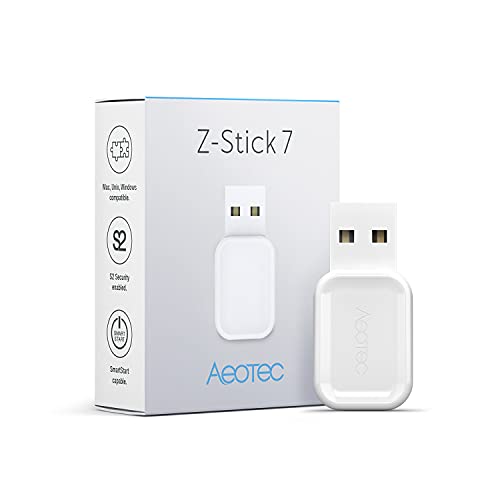
Aeotec Z-Stick 7 Plus Z-Wave USB Adapter
Best for: Raspberry Pi Z-Wave hub creation
- Connectivity
- Z-Wave, Z-Wave Plus
- Smart Home Compatibility
- Home Assistant, Indigo 7
- Network Interface
- USB
View on Amazon: Aeotec Z-Stick 7 Plus Z-Wave USB Adapter Affiliate link
The Aeotec Z-Stick 7 Plus is a USB Z-Wave hub controller designed for Raspberry Pi, Windows, Mac, and Linux systems. It uses the 700 Series chipset for improved range and speed. The device supports Z-Wave SmartStart and S2 security. It works with Home Assistant and Indigo 7 software. This hardware creates a Z-Wave network for your smart home devices without including software.
Pros
- Uses 700 Series Z-Wave technology for faster processing
- Transmits up to 250% further in open spaces
- Supports Z-Wave SmartStart and S2 security
- Compatible with Home Assistant and Indigo 7
Cons
- Requires separate home automation software installation
- Limited to Z-Wave protocol only
- No built-in display or remote control
Good fit if
- You use Raspberry Pi or Linux for home automation
- You need extended Z-Wave range for larger homes
- You want S2 security for your smart devices
Skip if
- You prefer Zigbee devices over Z-Wave
- You need a plug-and-play solution with included software
- You want a device with a built-in display
Verdict: Aeotec Z-Stick 7 Plus USB Z-Wave Controller provides robust Z-Wave connectivity for Linux and Raspberry Pi users. It suits those building a custom smart home hub who need extended range and strong security.
Specifications side by side
| Spec | Aeotec Zigbee Multipurpose Sensor | Aeotec Z-Stick 7 Plus Z-Wave USB Adapter |
|---|---|---|
| Connectivity | Zigbee | Z-Wave, Z-Wave Plus |
| Smart Home Compatibility | Google, Amazon Alexa, SmartThings | Home Assistant, Indigo 7 |
| Network Interface | not stated | USB |
| Color | White | white |
| Model | Aeotec Multipurpose Sensor | ZWA010 |
Frequently asked questions
Can I use the Aeotec Z-Stick 7 Plus to control Zigbee devices?
No. The Aeotec Z-Stick 7 Plus Z-Wave USB Adapter supports only Z-Wave and Z-Wave Plus protocols. It connects via USB to Raspberry Pi, Windows, Mac, or Linux systems. It acts as a hub controller for Z-Wave devices. It does not support Zigbee networks or devices. You need a separate Zigbee adapter for those devices.
Does the Aeotec Zigbee Multipurpose Sensor work with Home Assistant?
The product data lists SmartThings as its compatible smart home platform. It does not mention Home Assistant compatibility. The sensor uses Zigbee connectivity to communicate with hubs. You should verify your specific hub supports Zigbee multipurpose sensors before purchasing. The listing highlights integration with SmartThings for monitoring environmental data and access.
What is the main difference between these two Aeotec products?
They serve entirely different roles in your smart home. The Z-Stick 7 Plus is a USB controller that creates a Z-Wave hub. The Zigbee Multipurpose Sensor is a detection device that monitors your environment. One manages a network, while the other provides data like temperature or door status. They use different wireless protocols.
Is the Aeotec Zigbee Multipurpose Sensor a standalone hub?
No. It is a sensor that requires a compatible Zigbee hub to function. It consolidates multiple detection types into one device. It connects to platforms like SmartThings to send data. It does not act as a controller for other devices. You must have an existing hub that supports Zigbee devices to use it.
Can the Z-Stick 7 Plus replace a Zigbee hub?
It cannot. The Z-Stick 7 Plus is designed for Z-Wave networks only. It uses Gen7 technology to manage Z-Wave devices. It does not support Zigbee protocols. If you need to control Zigbee devices, you need a dedicated Zigbee adapter or hub. This USB stick is strictly for building a Z-Wave hub.
What smart home platforms does the Zigbee sensor support?
The Aeotec Zigbee Multipurpose Sensor lists SmartThings as its compatible platform. It uses Zigbee connectivity to send data to your hub. It is designed for users who need multi-sensor data in a single device. It fits buyers needing environmental and access monitoring through supported platforms. Check your hub documentation for specific Zigbee compatibility.
Does the Z-Stick 7 Plus have a built-in display?
The provided data does not mention a display for the Z-Stick 7 Plus. It is a USB adapter that connects to computers like Raspberry Pi or Linux systems. It functions as a controller for Z-Wave devices. You manage it through software on your host device. The listing focuses on its connectivity and hub capabilities rather than physical interface elements.