System Compatibility Explained: What It Means for Smart Thermostats
As an Amazon Associate we earn from qualifying purchases. Links on this page are affiliate links.
Understanding System Compatibility for Your Thermostat
System compatibility explained starts with understanding how your heating and cooling equipment connects to the new device. Your thermostat acts as a switch. It sends low-voltage signals to turn on your furnace or air conditioner. However, not all systems use the same voltage or wiring. You must match the thermostat to your specific setup to avoid damage or malfunction.
Line voltage systems run on 120 or 240 volts. These are common in electric baseboard heaters. They require a different type of thermostat than standard HVAC systems. Electric baseboard units need a thermostat that can handle high current. If you have these heaters, you need a device rated for line voltage. Using a standard low-voltage thermostat here can cause immediate failure.
Conventional systems use low-voltage wiring, typically 24 volts. This is the standard for most gas furnaces and central air conditioners. These systems use a transformer to step down the voltage. Your thermostat connects to terminals labeled R, W, Y, and G. This setup is the most common in homes. Most smart thermostats support this configuration.
Heat pumps are more complex. They require a thermostat that can handle reversing valves. This allows the system to switch between heating and cooling modes. Some heat pumps also have auxiliary heat strips. Your thermostat must manage these extra stages. If you have a heat pump, check the number of stages your system supports. Ensure the new device matches those requirements.
Why does this matter? Wrong compatibility leads to wasted money. It can also damage your HVAC equipment. Always check your current thermostat’s wiring before buying. Look for labels on your old unit or your HVAC manual. This simple step ensures your new smart control works safely and efficiently. Proper matching guarantees reliable temperature control year-round.
Thermostat System Compatibility Options
Line Voltage
Line voltage systems operate at 120V or 240V, typically found in electric baseboard heaters or radiant floor heating. These systems require thermostats rated for high voltage, which differs significantly from standard low-voltage HVAC units. You must ensure the device handles the specific amperage of your heater. The Honeywell Home RTH9585WF is an example of a unit designed for these higher power demands. Using a standard low-voltage thermostat on a line voltage system can cause immediate failure or safety hazards. Always verify the wattage rating matches your heating element. This compatibility type is essential for homes relying on electric resistance heating rather than central forced air.
Electric Baseboard
Electric baseboard heaters run on line voltage and often use specific wiring configurations, such as 4-wire setups for dual-element units. Thermostats for this category must support the direct high-voltage connection. The Mysa Lite is built specifically for these 4-wire baseboard heaters, offering smart scheduling without a subscription. These units replace traditional wall-mounted dials with digital control. You need a thermostat that can handle the continuous load of electric heating. Compatibility is strict; a standard HVAC thermostat will not work. Check your existing wiring carefully. If you have dual-element baseboards, you need a thermostat with two separate heating stages controlled independently. This ensures efficient temperature management in each room.
Conventional Systems
Conventional systems usually refer to standard 24V HVAC setups with separate heating and cooling components. These use low-voltage wiring, typically involving R, C, W, and Y wires. The Suuwer S701 is a non-programmable option for basic conventional control, focusing on simplicity. The Honeywell Home T6 Pro supports conventional systems with up to two heating and two cooling stages. These thermostats act as switches for your furnace and air conditioner. You need a C-wire for most smart models to maintain power. If your system lacks a C-wire, you may need a power extender kit. Compatibility here is common, but you must match the stage count to your equipment's capacity to avoid control issues.
Heat Pump
Heat pumps require thermostats that can manage both heating and cooling cycles efficiently, often including auxiliary heat stages. The Honeywell Home T6 Pro supports heat pumps with two stages of heating and cooling. The Aowel AW721 is a non-programmable option for standard 24V heat pump systems. These units must handle the reversing valve and emergency heat signals. You need to verify if your system uses dual fuel or standard electric auxiliary heat. The thermostat must align with your heat pump's specific wiring configuration. Mismatched compatibility can lead to inefficient operation or damage to the compressor. Check your system's stage requirements carefully. Smart heat pump thermostats often include features to optimize defrost cycles and auxiliary heat usage for better energy efficiency.
Who Needs Compatibility Info
Who needs it
You must review system compatibility if you use line voltage setups. These systems run at 120V or 240V, common in electric baseboard heaters or radiant floor heating. Standard low-voltage thermostats cannot handle this power. Using the wrong device risks damage or failure. You also need this check if you have conventional gas or oil furnaces. These rely on low-voltage signals to activate the heating sequence. Heat pump owners have an added layer of complexity. Your thermostat must support specific heat pump configurations, including auxiliary heat stages. Mismatched specs lead to inefficient operation or broken heating cycles. If your home uses any of these systems, verifying compatibility is not optional. It ensures your new thermostat communicates correctly with your existing hardware. Ignoring this step can result in a device that simply does not work or causes costly repairs.
Who can skip it
You can likely ignore deep compatibility details if you have a standard central air system paired with a gas furnace. These setups typically use low-voltage wiring that most smart thermostats support. You still need to check for basic wire presence, but complex voltage or heat pump specs are less critical here. Focus instead on features like geofencing, voice control, or energy reports. These elements improve daily convenience and tracking. If your current thermostat works well, you may not need to swap it out at all. Upgrading is only worth it if you want better data or automation. For simple heating and cooling needs, basic functionality matters more than advanced compatibility checks. Prioritize ease of installation and user interface over technical specs. This approach saves time and ensures you get a device that fits your routine without unnecessary complexity.
Smart Thermostat Glossary
Smart Home Compatibility
Support for platforms like Alexa or Google Home. This allows voice commands to control temperature settings remotely through connected apps and assistants.
System Compatibility
Whether the thermostat works with your specific HVAC equipment. Check your furnace or air conditioner type before purchasing to avoid installation errors.
Wiring Requirements
The physical connections needed, such as a C-wire for power. Some models need adapters. Verify your existing wires match the new device specs.
System Stages
The number of heating or cooling levels supported. A two-stage unit handles larger temperature shifts efficiently. Ensure the thermostat matches your system capacity.
Connectivity
How the device links to your network. Wi-Fi enables remote control. Bluetooth offers local pairing. Choose based on your home network setup and needs.
Programmability
The ability to set custom schedules. Manual programming saves energy. Some models learn habits automatically. Select based on your desired control level.
Display Type
The screen technology used. LCDs are common and power-efficient. Touchscreens offer modern interaction. Choose based on readability preferences and lighting conditions in your home.
Quick picks
| # | Product | Best for | Price |
|---|---|---|---|
| 1 | Mysa Lite Smart Thermostat for Baseboard Heaters | electric baseboard heaters with 4-wire setups | Check price of Mysa Lite Smart Thermostat for Baseboard Heaters on Amazon |
| 2 | Suuwer Single-Stage Non-Programmable Thermostat | basic conventional HVAC control | Check price of Suuwer Single-Stage Non-Programmable Thermostat on Amazon |
| 3 | Honeywell Home T6 Pro Wi-Fi Thermostat | Conventional systems and heat pumps with C-wire | Check price of Honeywell Home T6 Pro Wi-Fi Thermostat on Amazon |
| 4 | Honeywell Home Smart Color Touchscreen Thermostat | Central forced air or heat pump systems | Check price of Honeywell Home Smart Color Touchscreen Thermostat on Amazon |
| 5 | YeloDeer 240V 4-Wire Baseboard Thermostat | Manual control of 240V electric baseboards | Check price of YeloDeer 240V 4-Wire Baseboard Thermostat on Amazon |
| 6 | Aowel Non-Programmable Heat Pump Thermostat | Standard 24V conventional or heat pump systems | Check price of Aowel Non-Programmable Heat Pump Thermostat on Amazon |
Our 6 picks
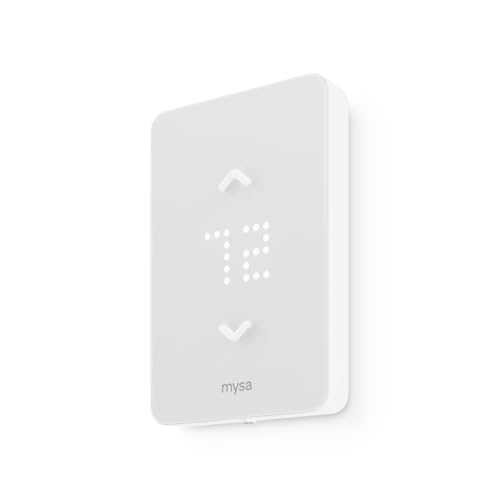
Mysa Lite Smart Thermostat for Baseboard Heaters
Best for: electric baseboard heaters with 4-wire setups
- System Compatibility
- Electric Baseboard (what this guide is about)
- Voltage
- 120V or 240V
- Wiring Requirement
- 4 wires
- Smart Home Compatibility
- Apple HomeKit, Alexa, Google Home
- Programmability
- 7-day scheduling
- Connectivity
- 2.4 GHz WiFi
View on Amazon: Mysa Lite Smart Thermostat for Baseboard Heaters Affiliate link
This Mysa unit handles 120V or 240V line voltage for electric baseboard and fan-forced heaters. It connects via 2.4 GHz Wi-Fi and supports Apple HomeKit and Alexa. You get 7-day scheduling and geofencing without a subscription. It requires four wires, including a neutral. This model fits homes with compatible electric heating systems and smart home users.
Pros
- Supports 120V or 240V line voltage
- Includes 7-day scheduling and geofencing
- Works with Apple HomeKit and Alexa
- No monthly subscription required
Cons
- Requires four wires including a neutral
- Incompatible with 24V furnaces or central heat pumps
- Limited to electric baseboard and fan-forced systems
Good fit if
- You have 120V or 240V electric baseboard heaters
- You want smart scheduling without a subscription fee
- You use Apple HomeKit or Alexa
Skip if
- You have a 24V central heating system
- Your thermostat box has only two wires
- You need control for heat pump systems
Verdict: Mysa Smart Thermostat LITE for Electric Baseboard is a solid choice for electric baseboard owners who need Wi-Fi control and smart scheduling without a subscription fee.

Suuwer Single-Stage Non-Programmable Thermostat
Best for: basic conventional HVAC control
- System Compatibility
- Conventional Systems (what this guide is about)
- Voltage
- 24VAC
- Wiring Requirement
- 2 to 5 wires, no C-wire required
- Programmability
- Non-programmable
- Display Type
- Backlit digital display
- System Stages
- 1 Heat / 1 Cool
View on Amazon: Suuwer Single-Stage Non-Programmable Thermostat Affiliate link
This Suwer S701 thermostat is designed for conventional single-stage 1 heat and 1 cool systems. It operates on 24VAC power and requires only 2 to 5 wires, with no C-wire needed on most setups. The device features a large backlit digital display for easy reading. You get room temperature calibration and adjustable swing settings. It is a straightforward option for basic HVAC control without complex programming.
Pros
- Compatible with conventional 1H/1C single-stage systems
- No C-wire required on most installations
- Large blue backlit digital display
- Adjustable temperature swing from 0.2°F to 2°F
Cons
- Non-programmable design limits scheduling flexibility
- Incompatible with heat pump and multistage systems
- Lacks Wi-Fi connectivity for remote control
Good fit if
- You have a conventional 1 heat/1 cool system
- You prefer simple manual temperature adjustments
- You need a thermostat that works without a C-wire
Skip if
- You use a heat pump or multistage HVAC system
- You want to control temperature from your phone
- You need programmable scheduling features
Verdict: Suuwer S701 Non-Programmable Thermostat is a solid choice for homeowners with basic conventional heating and cooling who value simplicity and easy installation over smart features.
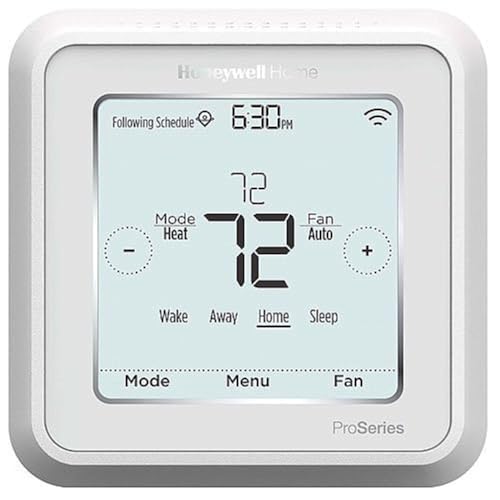
Honeywell Home T6 Pro Wi-Fi Thermostat
Best for: Conventional systems and heat pumps with C-wire
- System Compatibility
- Conventional Systems, Heat Pump (what this guide is about)
- Wiring Requirement
- Hardwired - C-wire required
- Smart Home Compatibility
- Apple HomeKit, Amazon Alexa
- Programmability
- Geofencing, 7-day, 5-2, 5-1-1, 1-week
- Connectivity
- Wi-Fi
- System Stages
- 2 Heat / 2 Cool
View on Amazon: Honeywell Home T6 Pro Wi-Fi Thermostat Affiliate link
The Honeywell Lyric T6 Pro supports up to 2 heat and 2 cool stages, making it suitable for conventional systems and heat pumps. It requires a hardwired C-wire connection. You can choose from geofencing, 7-day, or non-programmable modes. It integrates with Apple HomeKit and Amazon Alexa. This model offers flexible scheduling options for various heating and cooling setups.
Pros
- Supports up to 2 heat and 2 cool stages
- Compatible with Apple HomeKit and Amazon Alexa
- Offers geofencing and 7-day programming options
- Suitable for conventional systems and heat pumps
Cons
- Requires a hardwired C-wire connection
- No support for line voltage or electric baseboard systems
- Limited to 2 heat/2 cool stages maximum
Good fit if
- You have a conventional system or heat pump
- You need a C-wire for installation
- You want Alexa or HomeKit integration
Skip if
- You use electric baseboard heaters
- You do not have a C-wire available
- You need support for more than 2 heat/2 cool stages
Verdict: Honeywell Lyric T6 Pro Wi-Fi Thermostat fits users with conventional systems or heat pumps who have a C-wire and want smart home integration. It does not suit electric baseboard setups or those without a C-wire.

Honeywell Home Smart Color Touchscreen Thermostat
Best for: Central forced air or heat pump systems
- System Compatibility
- Line Voltage (what this guide is about)
- Wiring Requirement
- C-wire required
- Smart Home Compatibility
- Alexa
- Programmability
- 7-day
- Display Type
- Color touchscreen
- Certification
- Energy Star Certified
View on Amazon: Honeywell Home Smart Color Touchscreen Thermostat Affiliate link
The Honeywell Home RTH9585WF is a Wi-Fi-enabled, 7-day programmable thermostat featuring a color touchscreen. It supports forced air, hot water, steam, and heat pumps with electric backup. This unit requires a C-wire for power. It is Energy Star certified and integrates with Alexa. It is designed for homes with central HVAC systems rather than line-voltage electric baseboard heaters.
Pros
- Color touchscreen display for intuitive operation
- 7-day programmable scheduling options
- Wi-Fi connectivity for remote control
- Energy Star certified for energy tracking
- Compatible with Alexa smart home integration
Cons
- Requires a C-wire for power installation
- Not compatible with electric baseboard heat systems
- Limited to Alexa smart home ecosystem
Good fit if
- You have a forced air, hot water, or steam system
- You need a 7-day programmable schedule
- You have a C-wire available for installation
Skip if
- You use electric baseboard heaters
- You do not have a C-wire
- You prefer a non-programmable manual thermostat
Verdict: The Honeywell Home RTH9585WF Smart Thermostat is a solid choice for central HVAC owners who need flexible scheduling and color display clarity. It fits users with existing C-wires and Alexa setups who want to avoid baseboard-specific models.

YeloDeer 240V 4-Wire Baseboard Thermostat
Best for: Manual control of 240V electric baseboards
- System Compatibility
- Electric Baseboard, Line Voltage (what this guide is about)
- Voltage
- 240V
- Wiring Requirement
- 4-Wire
- Programmability
- Non-programmable
- Circuit Type
- Single Pole
View on Amazon: YeloDeer 240V 4-Wire Baseboard Thermostat Affiliate link
The YeloDeer thermostat is a manual, non-programmable unit designed for 240V electric baseboard and fan-forced heaters. It uses a 4-wire connection and offers a temperature range of 40°F to 80°F. The large knob allows continuous adjustment rather than fixed increments. It features indicator lights for power and heating status. This device suits users who need precise, straightforward control for high-voltage electric heating systems without smart features.
Pros
- 240V voltage rating for electric baseboards
- 4-wire wiring requirement
- Continuous temperature adjustment via large knob
- Heating indicator light
- 40°F to 80°F control range
Cons
- Non-programmable design
- Manual operation only
- No Wi-Fi or app connectivity
Good fit if
- You have 240V electric baseboard heaters
- You prefer manual dial control
- You need a 4-wire connection
Skip if
- You require programmable schedules
- You have 120V heating systems
- You want remote app control
Verdict: YeloDeer 240V Electric Baseboard Thermostat fits users with 240V baseboard heaters who want simple, manual temperature control. It is not suitable for those needing scheduling or smart home integration.

Aowel Non-Programmable Heat Pump Thermostat
Best for: Standard 24V conventional or heat pump systems
- System Compatibility
- Conventional Systems, Heat Pump (what this guide is about)
- Voltage
- 24VAC
- Wiring Requirement
- No C-wire required on most systems
- Programmability
- Non-programmable
- Display Type
- Backlit digital display
- Sensor Support
- Humidity
View on Amazon: Aowel Non-Programmable Heat Pump Thermostat Affiliate link
The Aowel AW721 is a non-programmable thermostat designed for 24V systems. It supports conventional single-stage setups and heat pumps with up to two heating stages and one cooling stage. It features a backlit digital display that shows indoor temperature and humidity. The unit runs on 24VAC power or two AAA batteries, often without needing a C-wire. It includes adjustable cycle rates and compressor delay protection.
Pros
- Supports 2 Heat/1 Cool configurations for heat pumps and conventional systems
- Displays indoor temperature and humidity on a 5.0 sq inch backlit screen
- Operates on 24VAC or 2 AAA batteries without a C-wire on most systems
- Allows separate heating and cooling swing settings and selectable compressor delay
Cons
- Non-programmable design lacks scheduling features found in smart models
- Incompatible with line voltage systems like electric baseboard heaters
- Does not support multi-stage conventional systems or mini splits
Good fit if
- You need a simple thermostat for a 24V conventional or heat pump system
- You prefer manual temperature control without programming schedules
- You want to avoid installing a C-wire in most configurations
Skip if
- You use line voltage electric baseboard or radiant heating
- You require a programmable thermostat with scheduling capabilities
- You have a multi-stage conventional furnace or mini split system
Verdict: The Aowel AW721 Non-Programmable Thermostat fits users with standard 24V heating and cooling systems who want a straightforward manual control option without smart features.
Specifications side by side
| Spec | Mysa Lite Smart Thermostat for Baseboard Heaters | Suuwer Single-Stage Non-Programmable Thermostat | Honeywell Home T6 Pro Wi-Fi Thermostat | Honeywell Home Smart Color Touchscreen Thermostat | YeloDeer 240V 4-Wire Baseboard Thermostat | Aowel Non-Programmable Heat Pump Thermostat |
|---|---|---|---|---|---|---|
| System Compatibility | Electric baseboard, fan-forced, wall | Conventional single-stage 1H/1C | Up to 2 Heat/1 Cool HP, 2 Heat/2 Cool | Forced air, hot water, steam, heat pumps | Electric baseboards, fan-forced heaters | 24V conventional, heat pump |
| Voltage | 120V or 240V | 24VAC | not stated | not stated | 240V | 24VAC |
| Wiring Requirement | 4 wires | 2 to 5 wires, no C-wire required | Hardwired - C-wire required | C-wire required | 4-Wire | No C-wire required on most systems |
| Smart Home Compatibility | Apple HomeKit, Alexa, Google Home | not stated | Apple HomeKit, Amazon Alexa | Alexa | not stated | not stated |
| Programmability | 7-day scheduling | Non-programmable | Geofencing, 7-day, 5-2, 5-1-1, 1-week | 7-day | Non-programmable | Non-programmable |
| Connectivity | 2.4 GHz WiFi | not stated | not stated | not stated | not stated | not stated |
| Display Type | not stated | Backlit digital display | not stated | Color touchscreen | not stated | Backlit digital display |
| Sensor Support | not stated | not stated | not stated | not stated | not stated | Humidity |
| Certification | not stated | not stated | not stated | Energy Star Certified | not stated | not stated |
| System Stages | not stated | 1 Heat / 1 Cool | 2 Heat / 2 Cool | not stated | not stated | not stated |
| Circuit Type | not stated | not stated | not stated | not stated | Single Pole | not stated |
| Dimensions | 2.48 × 4.65 × 6.02 inches | 4.72 × 0.98 × 3.81 inches | 5 × 2.3 × 6 inches | 3.5 × 4.5 × 0.88 inches | not stated | 0.98 × 4.92 × 3.74 inches |
| Weight | not stated | 6.72 ounces | 12 ounces | 14.4 ounces | not stated | not stated |
| Size | 2025 | not stated | 4.06 inches square | 1 (Pack of 2) | 240V | not stated |
| Color | White | Blue Backlight | White | Gray | White | White |
| Model | BB V2-0-L | S701 | TH6220WF2006 | RTH9585WF1004/W | 2755c3db-325d-4f6b-b318-499cf2b5e9c5 | AW721 |
Frequently asked questions
Does a smart thermostat work with electric baseboard heaters?
Yes, but you need a specific line voltage model. The Mysa Lite Smart Thermostat is designed for 240V electric baseboard heaters with 4-wire setups. It provides Wi-Fi control and smart scheduling without requiring a subscription. Standard low-voltage thermostats cannot handle this power level.
What is the difference between line voltage and low voltage systems?
Line voltage systems operate at 120V or 240V, typically found in electric baseboard heaters. Low voltage systems use 24V signals for conventional HVAC units. You must match the thermostat to your system type. Using the wrong voltage rating risks damaging the equipment or the thermostat.
Do I need a C-wire for a Wi-Fi thermostat?
Many Wi-Fi models require a C-wire for continuous power. The Honeywell Home Smart Color Touchscreen Thermostat lists C-wire as a requirement. Without it, the device may not stay connected or function correctly. Check your wiring before purchasing a smart thermostat with connectivity features.
Which thermostat works with heat pumps?
Several models support heat pump systems. The Honeywell Home T6 Pro works with heat pumps and conventional systems, supporting 2 heat and 2 cool stages. The Aowel AW721 also fits standard 24V heat pump setups. Ensure your model supports the specific stages of your heat pump.
Can I use a non-programmable thermostat for basic control?
Yes, non-programmable thermostats offer simple manual control. The Suuwer S701 is a single-stage option for basic conventional HVAC systems. It lacks smart features but provides reliable temperature adjustment. This is suitable if you do not need scheduling or remote app access.
Is Alexa compatibility important for smart thermostats?
Alexa compatibility allows voice control through Amazon devices. The Mysa Lite supports both Alexa and Apple HomeKit. The Honeywell Home Smart Color Touchscreen model works with Alexa. This feature lets you adjust temperatures using voice commands, adding convenience to your smart home setup.
What if I only need manual temperature control?
You can choose a manual thermostat without smart features. The YeloDeer 240V model is designed for manual control of 240V electric baseboards. It requires a 4-wire setup. This option is ideal if you want simplicity and do not need Wi-Fi or app integration.