SONOFF Zigbee Wi-Fi Bridge Hub Review: Specs, Pros and Cons
As an Amazon Associate we earn from qualifying purchases. Links on this page are affiliate links.
This sonoff zbbridge smart zigbee bridge review covers a device that links your Zigbee sensors to your Wi-Fi network. It acts as a central hub, allowing you to control multiple devices through a single app. The unit supports both Wi-Fi and Zigbee protocols, which is essential for compatibility with many smart home accessories. It is a small piece of hardware, measuring 2.44 inches wide and 0.79 inches high. At just 1.41 ounces, it is light enough to sit on a shelf without taking up much space. This bridge helps you build a connected home without needing a separate, bulky gateway for each protocol.
What stands out
- Supports both Wi-Fi and Zigbee protocols for broad device compatibility.
- Compact dimensions of 2.44 by 2.44 inches and 0.79 inches high.
- Lightweight design at 1.41 ounces for easy placement.
- Allows app control for managing multiple connected devices.
Who it fits
Good fit for
You should consider this hub if you already use Zigbee devices and want to connect them to your home Wi-Fi network without buying a complex gateway. It is ideal for users who prefer app-based control and want a simple, small device that sits quietly in the background. If you have sensors for doors, windows, or temperature that use Zigbee, this bridge lets you monitor them remotely. It suits those who want a straightforward solution to expand their smart home reach without adding bulk to their setup.
Who should skip it
You should look elsewhere if you need a device with a built-in display or physical buttons for local control, as this unit relies entirely on app management. It is not suitable if you require Bluetooth connectivity for direct pairing without a hub, since it only lists Zigbee and Wi-Fi. Buyers who want a standalone thermostat or a device with advanced automation logic built into the hardware itself may find this bridge too basic. It is simply a connector, not a controller with its own extensive feature set.
Verdict: This bridge is a simple, small tool for connecting Zigbee devices to your Wi-Fi network. It works well if you just need to extend your smart home reach via an app.
Key specs explained
Connectivity: Wi-Fi, Zigbee
This device bridges two distinct wireless standards. You use Wi-Fi to connect the hub to your home router and internet. Then, you use Zigbee to communicate with compatible sensors and switches. This dual approach lets you manage a network of low-power devices without replacing your existing internet setup. It is essential for users who want to centralize control of various smart home components through a single interface.
Dimensions: 2.44 inches x 2.44 inches x 0.79 inches
The unit features a compact, square footprint with a very low profile. You can place it on a shelf or desk without taking up much space. The small size means it fits easily into tight spots in your home. When shopping for hubs, this form factor offers flexibility for placement near other electronics or in utility areas where space is limited and visibility is not a priority.
Weight: 1.41 ounces
The device is extremely lightweight. You do not need a sturdy mount or heavy bracket to hold it in place. This low mass makes it easy to move around during initial setup or if you decide to change its location later. It is simple to handle and poses no risk of damaging surfaces if it is bumped, making it a low-commitment addition to your smart home ecosystem.
Height: 0.79 inches
The thin design allows the hub to sit flat against a wall or slide behind other devices. You can hide it in tight spaces without it protruding significantly. This low profile is useful for keeping your home looking tidy. It ensures the hub does not interfere with other items on a shelf or desk, allowing for a cleaner and more organized arrangement of your smart home hardware.
Design and Build Quality
According to the listing, the SONOFF Zigbee Wi-Fi Bridge Hub has compact dimensions of 2.44 inches in width, 2.44 inches in length, and 0.79 inches in height. This small footprint allows you to place it on a shelf, desk, or window sill without taking up much space. The low profile means it does not dominate your room visually. You can tuck it away in a corner or behind other electronics if you prefer a cleaner look.
The device weighs 1.41 ounces. This light weight suggests it is easy to move around during setup or when you need to adjust its position for better signal reception. Because it is not heavy, you do not need a sturdy mount or a dedicated stand. A simple flat surface is enough to keep it stable. The listing does not specify the materials used in the casing, so you cannot verify if it is plastic or metal based on this data alone.
There are no visible controls or buttons mentioned in the provided specifications. This implies that you will likely manage the device entirely through the app on your phone or computer. The lack of physical switches means you do not need to reach for the unit to change settings. You rely on software commands instead. The finish is not described, so you cannot know if it is matte or glossy. You should assume the design is simple and functional, focusing on connectivity rather than aesthetics.
Setup and daily operation guide
The SONOFF Zigbee Wi-Fi Bridge Hub connects to your home network via Wi-Fi. You link the device to your router to enable internet access. This connection allows the hub to receive commands from your mobile app. The listing indicates that the unit supports multi-device management. This means you can pair various Zigbee sensors and switches to the bridge. The device acts as a translator between your Wi-Fi network and the Zigbee protocol. You control these connected devices through a single application interface. The compact dimensions of 2.44 inches by 2.44 inches by 0.79 inches allow you to place the hub in many locations. Its light weight of 1.41 ounces makes it easy to position on a shelf or desk. You do not need to worry about the physical footprint of the unit. Daily use involves sending commands from your app to the hub. The hub then relays these instructions to the paired Zigbee devices. This setup simplifies the management of your smart home ecosystem. You avoid the need for separate controllers for different devices. The dual-protocol support ensures that your Wi-Fi connected app can communicate with the broader Zigbee network. This integration provides a unified control experience for your compatible sensors and switches.
Before You Buy This Hub
You need to verify that your existing sensors use the Zigbee protocol. This bridge does not connect directly to standard Wi-Fi devices. It only translates Zigbee signals. You must ensure your smart home app supports SONOFF devices. Without compatible software, the hardware has limited value. Check your current ecosystem before purchasing. This unit fits into homes that already use Zigbee accessories. It does not replace a main thermostat. It extends your network range for sensors. You should place it centrally for best signal coverage. Keep it away from thick walls. The small size helps with placement. You do not need extra hubs if this supports all your devices. Review your device list carefully. This bridge is a connector, not a controller. It relies on your app for commands. Make sure your router is nearby. Wi-Fi range matters for setup. Zigbee range matters for sensors. This device works best in mixed environments. It adds stability to your sensor network. You save on separate hubs. But compatibility is key. Do not buy it blindly. Check your device list first.
Check before you buy
- Confirm your sensors use the Zigbee protocol.
- Ensure your app supports SONOFF devices.
- Check if your router is nearby.
- Verify your sensors are compatible with this bridge.
The product at a glance
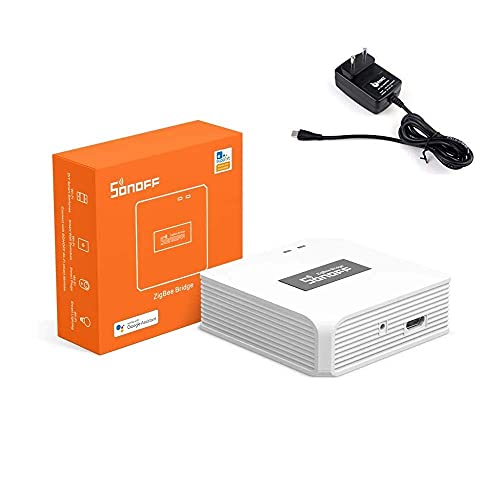
SONOFF Zigbee Wi-Fi Bridge Hub
Best for: Adding Zigbee devices to Wi-Fi networks
- Connectivity
- Wi-Fi, Zigbee
- Dimensions
- 2.44 × 2.44 × 0.79 inches
- Weight
- 1.41 ounces
View on Amazon: SONOFF Zigbee Wi-Fi Bridge Hub Affiliate link
The SONOFF ZBBridge Smart Zigbee Bridge Hub connects Zigbee devices to your home network via Wi-Fi. It supports dual-protocol operation, allowing you to control multiple devices through an app. The unit is compact, measuring 2.44 inches square and 0.79 inches tall. It weighs just 1.41 ounces. This hub suits users who want to integrate Zigbee sensors and switches into a Wi-Fi-based smart home system without needing a separate gateway.
Pros
- Supports both Wi-Fi and Zigbee protocols
- Compact dimensions of 2.44 x 2.44 x 0.79 inches
- Lightweight at 1.41 ounces
- Allows app control for connected devices
Cons
- Requires a Wi-Fi connection to function
- No mention of local processing capabilities
- Limited to Zigbee devices only
Good fit if
- You have a Wi-Fi network and want to add Zigbee devices
- You need a small hub that fits in tight spaces
- You prefer controlling devices through an app
Skip if
- You require Bluetooth connectivity
- You need a hub that works without Wi-Fi
- You want to control non-Zigbee devices directly
Verdict: SONOFF Zigbee Wi-Fi Bridge Hub is a compact solution for adding Zigbee devices to a Wi-Fi network. It fits users who prioritize app control and small form factors over local processing.
Specifications side by side
| Spec | SONOFF Zigbee Wi-Fi Bridge Hub |
|---|---|
| Connectivity | Wi-Fi, Zigbee |
| Dimensions | 2.44 × 2.44 × 0.79 inches |
| Weight | 1.41 ounces |
Frequently asked questions
Does the SONOFF Zigbee Wi-Fi Bridge Hub support Apple HomeKit?
The product data does not mention Apple HomeKit compatibility. You should check the SONOFF app support list to see if your desired smart home ecosystem is included. This bridge primarily focuses on linking Zigbee devices to Wi-Fi networks through its own platform. Verify app compatibility before purchasing to ensure it meets your automation needs.
How many Zigbee devices can this hub connect to?
The provided specifications do not state a maximum device limit for the SONOFF Zigbee Wi-Fi Bridge Hub. You should consult the official SONOFF documentation or app guidelines for the specific capacity. Generally, these bridges support multiple sensors and switches, but the exact number depends on network conditions and device types.
Is the SONOFF hub compatible with Alexa or Google Home?
The listing data does not explicitly list third-party voice assistant compatibility like Alexa or Google Home. You will likely need to use the native SONOFF app for direct control. Check the manufacturer's website for integration guides, as many Zigbee bridges allow workarounds via smart home platforms, but this is not confirmed in the specs.
Can I use this bridge without an internet connection?
The device requires a Wi-Fi connection to your home router for internet access. This link allows the hub to receive commands from your mobile app. Local control without internet is not mentioned in the specifications. You should assume an active internet connection is necessary for full functionality and remote access features.
Does the SONOFF bridge include a built-in temperature sensor?
The provided data does not mention a built-in temperature or environmental sensor for this hub. It functions as a bridge to connect external Zigbee sensors. You will need separate Zigbee-compatible devices for monitoring temperature or humidity. The hub itself focuses on connectivity rather than environmental data collection.
What is the power source for the SONOFF Zigbee bridge?
The specifications list weight and dimensions but do not specify the power source or cable type. You should check the product manual or listing images for power requirements. Most similar hubs use a standard USB power adapter. Ensure you have a nearby power outlet or USB port for installation.
Is the SONOFF hub secure for home automation?
The provided data does not detail specific security protocols or encryption standards used by the SONOFF Zigbee Wi-Fi Bridge Hub. You should review SONOFF's privacy policy and app security features for more information. Standard Wi-Fi security applies to the connection with your router. Consider your network's overall security posture when adding new devices.