What Is Smart Home Compatibility? A Guide for Smart Thermostats Buyers (2026)
As an Amazon Associate we earn from qualifying purchases. Links on this page are affiliate links.
Smart Home Compatibility Explained For Buyers
Smart home compatibility explained helps you choose a thermostat that works with your existing devices. This spec tells you which ecosystems your thermostat supports. It matters because you want your heating and cooling to respond to voice commands and automation routines. Without this, you may buy a device that sits isolated from your smart home network.
The three main platforms are Alexa, Google Home, and Apple HomeKit. Each platform has its own requirements and features. Alexa supports thousands of skills. Google Home integrates deeply with Google Assistant. Apple HomeKit focuses on privacy and secure local control. Your thermostat must support at least one of these to function as a smart device.
On product listings, you will see badges or checkmarks for these platforms. Look for "Works with Alexa" or "Matter over Thread" labels. Some thermostats list all three. Others support only one or two. If a listing does not mention a platform, assume it does not support it. Do not guess. Check the specifications table carefully.
Why does this matter to you? You likely already own smart speakers or displays. If you use an Amazon Echo, you need an Alexa-compatible thermostat. If you use a Google Nest Hub, choose Google Home support. Apple users should look for HomeKit certification. This ensures the thermostat appears in the Home app and responds to Siri commands.
Automation is the key benefit. You can set routines that adjust temperature based on time, location, or other sensors. For example, lower the heat when you leave home. Raise it before you arrive. This only works if the thermostat speaks the same language as your other devices. Verify compatibility before purchasing. It saves time and ensures seamless integration into your daily routine.
Alexa, Google Home, or Apple HomeKit
Alexa
Alexa compatibility allows you to control heating and cooling through Amazon Echo devices. You can set temperatures or check system status using voice commands. This option suits users who already own Amazon smart speakers or rely on the Alexa app for home automation. The Honeywell Home Smart Color Touchscreen Thermostat supports this ecosystem. It also works with the Ecobee Smart Thermostat Premium, which offers dual support for Alexa and Siri. The trade-off is limited integration with non-Amazon platforms. If your home relies heavily on Google or Apple services, Alexa-only support may restrict your automation workflows.
Google Home
Google Home compatibility integrates your thermostat with Google Assistant and Nest devices. You can adjust settings via Google Nest Hub screens or mobile apps. This option is ideal for households using Google smart displays or seeking seamless automation within the Google ecosystem. The Google Nest Learning Thermostat 4th Gen with Sensor fits this category perfectly. The Mysa Lite Smart Thermostat for Baseboard Heaters also supports Google Home alongside Alexa. The main limitation is the lack of native support for Apple HomeKit. Users invested in Apple devices may find fewer options for unified control across their entire home.
Apple HomeKit
Apple HomeKit support enables control through the Apple Home app and Siri. You can automate routines based on location or time using Apple devices. This option suits users who prioritize privacy and want a unified interface for all smart home gear. The Google Nest Learning Thermostat (4th Gen) with Sensor includes full HomeKit support. The Meross Electric Baseboard Smart Thermostat also offers HomeKit compatibility for electric heating systems. The trade-off is that fewer models support this platform compared to Alexa or Google Home. You may need to verify specific model compatibility before purchasing to ensure it works with your existing Apple devices.
Is This Spec Worth Your Attention
Who needs it
You need this specification if you already use smart speakers or hubs from Amazon, Google, or Apple. Supporting Alexa, Google Home, and Apple HomeKit means your thermostat integrates seamlessly into your existing routine. You can adjust temperatures using simple voice commands without reaching for your phone. This compatibility also allows you to create automated scenes. For example, you might set your home to cool down when you leave or warm up when you arrive. If you value centralized control across multiple devices, broad ecosystem support is essential. It ensures your heating and cooling system responds reliably to your smart home infrastructure. Without this wide range of compatibility, you may face limitations in automation or find yourself using separate apps for different devices. Broad support reduces friction and keeps your climate control unified.
Who can skip it
You can skip this detailed compatibility check if you do not use voice assistants or smart home hubs. If you control your thermostat manually via its physical interface or a dedicated mobile app, ecosystem support is irrelevant. You also do not need to worry about this spec if you plan to replace your entire smart home setup soon. In those cases, focus on other critical specifications like sensor accuracy, energy reporting features, or HVAC system compatibility. Prioritize hardware that fits your wiring and heating type. These technical fundamentals determine whether the device functions at all. Compatibility is a convenience feature, not a functional requirement for basic operation. If you prefer simplicity and do not intend to automate your climate control through third-party platforms, ignore this section. Focus your research on core performance metrics instead.
Smart Thermostat Glossary
Smart home compatibility
The ability of your thermostat to connect with other devices and platforms. This ensures it works with your existing smart home ecosystem for unified control.
Certification
Official approval from a platform like Works with Alexa or Works with Google Home. This badge confirms the device meets specific integration standards for reliability.
System compatibility
Whether the thermostat fits your current heating and cooling equipment. You must check this to ensure the unit can communicate with your furnace or AC.
Wiring requirement
The physical cables needed to power the device. Some models need a common wire, while others use battery power or harvest energy from your system.
Programmability
How you set temperature schedules. Options range from basic manual adjustments to advanced weekly programming or learning-based automation that adapts to your habits.
Connectivity
The method the thermostat uses to talk to your home network. Common types include Wi-Fi for remote access or Bluetooth for local setup and control.
System stages
The number of heating or cooling steps your equipment supports. A two-stage thermostat manages different output levels, improving comfort and efficiency for complex systems.
Display type
The screen technology used to show information. Options include simple LED indicators, basic LCDs, or high-resolution color touchscreens for detailed data and navigation.
Quick picks
Our 6 picks
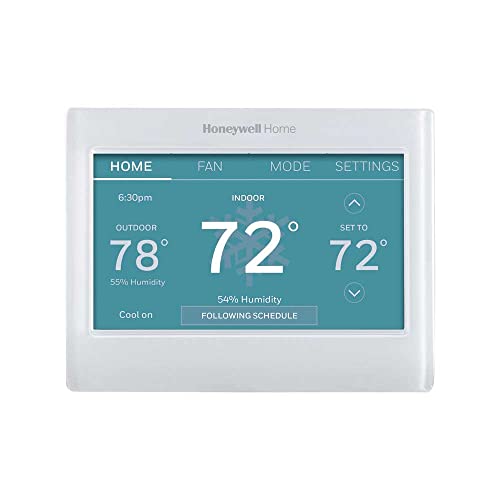
Honeywell Home Smart Color Touchscreen Thermostat
Best for: multi-platform smart home users with forced air
- Smart Home Compatibility
- Alexa (what this guide is about)
- System Compatibility
- Forced air, hot water, steam, heat pump
- Wiring Requirement
- C-Wire Required
- Programmability
- Programmable
- Display Type
- Color touchscreen
- Sensor Support
- Humidity
View on Amazon: Honeywell Home Smart Color Touchscreen Thermostat Affiliate link
This Honeywell Home thermostat features a customizable color touchscreen and Wi-Fi connectivity. It supports Amazon Alexa, Google Assistant, and Microsoft Cortana. The device is ENERGY STAR certified and tracks indoor humidity. It works with forced air, hot water, steam, and heat pump systems. You need a C-wire for installation. It does not support electric baseboard heaters. This unit suits users wanting a programmable interface with broad smart home integration.
Pros
- Customizable color touchscreen display
- Compatible with Alexa, Google Assistant, and Cortana
- ENERGY STAR certified for energy tracking
- Displays indoor and outdoor humidity
Cons
- Requires a C-wire for power
- Incompatible with electric baseboard heaters
- No Apple HomeKit support listed
Good fit if
- You have a forced air or heat pump system
- You want a customizable color display
- You use Alexa or Google Assistant
Skip if
- You have electric baseboard heating
- You cannot install a C-wire
- You require Apple HomeKit compatibility
Verdict: Honeywell Home RTH9600WF Smart Thermostat fits users with forced air systems who value a customizable screen and multi-platform smart home support.

Google Nest Learning Thermostat (4th Gen) with Sensor
Best for: Matter-compatible homes with 24V systems
- Smart Home Compatibility
- Alexa, Google Home, Apple HomeKit (what this guide is about)
- System Compatibility
- 24V; gas, electric, oil, heat pump
- Voltage
- 24V
- Wiring Requirement
- no C wire required in most homes
- Programmability
- Learning
- Sensor Support
- Nest Temperature Sensor (2nd gen)
View on Amazon: Google Nest Learning Thermostat (4th Gen) with Sensor Affiliate link
The Google Nest Learning Thermostat (4th Gen) is a 24V smart thermostat with a 60% larger display and Matter compatibility. It works with Alexa, Siri, and Google Assistant. The unit includes a Nest Temperature Sensor to manage hot and cold spots. It requires no C wire in most homes. This model suits users who want automated scheduling and broad smart home integration.
Pros
- Matter compatible for simple smart home integration
- Includes Nest Temperature Sensor for room-specific control
- Works with Alexa, Siri, and Google Assistant
- No C wire required in most homes
Cons
- Learning-only programmability lacks manual schedule editing
- Limited to 24V systems only
- No physical remote control included
Good fit if
- You use Alexa, Siri, or Google Assistant
- You want automated energy-saving schedules
- You have a 24V heating or cooling system
Skip if
- You need manual schedule overrides without app access
- You have a non-24V HVAC system
- You prefer a thermostat with a built-in remote
Verdict: The Google Nest Learning Thermostat 4th Gen fits users who prioritize Matter compatibility and automated learning over manual control. It is ideal for homes with 24V systems and existing smart speaker ecosystems.

Google Nest Learning Thermostat 4th Gen with Sensor
Best for: Google and Alexa users seeking automated comfort
- Smart Home Compatibility
- Alexa, Google Home (what this guide is about)
- System Compatibility
- Most 24V gas, electric, heat pump
- Voltage
- 24V
- Wiring Requirement
- No C-wire required in most homes
- Programmability
- Learning
- Display Type
- Borderless display
View on Amazon: Google Nest Learning Thermostat 4th Gen with Sensor Affiliate link
The Google Nest Learning Thermostat (4th Gen) is a 24V smart thermostat designed for most gas, electric, and heat pump systems. It features a borderless display and includes a Nest Temperature Sensor to manage room-specific comfort. It integrates with Alexa and Google Home. The unit learns your schedule to adjust heating and cooling automatically. It requires no C-wire in most homes. This model suits users who want automated energy savings and precise temperature control across different rooms.
Pros
- Includes Nest Temperature Sensor for remote room monitoring
- Works with Alexa and Google Home
- No C-wire required in most homes
- Borderless display with adjustable brightness
Cons
- Limited to Alexa and Google Home ecosystems
- No Apple HomeKit support listed
- Learning algorithm may not suit irregular schedules
Good fit if
- You use Alexa or Google Home for smart control
- You have a 24V heating or cooling system
- You want to manage temperatures in multiple rooms
Skip if
- You require Apple HomeKit compatibility
- You have a non-standard 24V system requiring a C-wire
- You prefer manual programming over learning features
Verdict: Google Nest Learning Thermostat 4th Gen fits users in the Google or Alexa ecosystems who want automated comfort and multi-room temperature management without complex wiring.
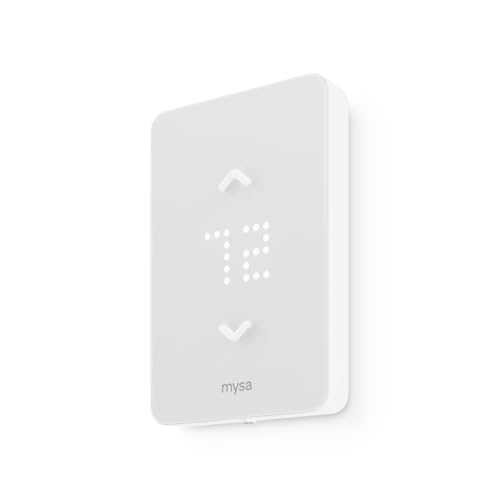
Mysa Lite Smart Thermostat for Baseboard Heaters
Best for: Electric baseboard heaters with 4-wire setups
- Smart Home Compatibility
- Alexa, Apple HomeKit (what this guide is about)
- System Compatibility
- Electric baseboard, fan-forced, wall
- Voltage
- 120V or 240V
- Wiring Requirement
- 4 wires
- Programmability
- 7-day scheduling
- Connectivity
- 2.4 GHz WiFi
View on Amazon: Mysa Lite Smart Thermostat for Baseboard Heaters Affiliate link
This Mysa unit controls 120V or 240V electric baseboard and fan-forced heaters. It connects via 2.4 GHz WiFi and supports Apple HomeKit, Alexa, and Google Home. The device requires four wires, including a neutral, making it incompatible with standard two-wire switch loops or 24V central systems. It offers seven-day scheduling and geofencing without a subscription fee. You should use this model if you are upgrading line-voltage electric heating and need broad smart home integration.
Pros
- Supports Apple HomeKit, Alexa, and Google Home
- Handles 120V or 240V line-voltage heaters
- Includes seven-day scheduling and geofencing
- No monthly subscription required for core features
Cons
- Requires four wires including a neutral
- Incompatible with 24V central heating systems
- Only supports 2.4 GHz WiFi networks
Good fit if
- You have electric baseboard or fan-forced heaters
- You need Apple HomeKit or Google Home support
- Your wall box has four wires available
Skip if
- You have a 24V furnace or central heat pump
- Your installation only has two wires
- You require a 5 GHz WiFi connection
Verdict: Mysa Smart Thermostat LITE for Electric Baseboard is a solid option for electric baseboard owners who need Apple HomeKit or Google Home compatibility. It fits users with four-wire installations who want scheduled heating without a subscription.

Ecobee Smart Thermostat Premium with SmartSensor
Best for: Dual Alexa and Siri ecosystem users
- Smart Home Compatibility
- Alexa, Google Home (what this guide is about)
- System Compatibility
- 95% of HVAC systems
- Wiring Requirement
- Power Extender Kit (PEK) / C-wire
- Sensor Support
- SmartSensor, air quality, occupancy
- Connectivity
- Wi-Fi
- Dimensions
- 1.02 × 4.09 × 4.09 inches
View on Amazon: Ecobee Smart Thermostat Premium with SmartSensor Affiliate link
This ecobee unit supports both Alexa and Siri voice assistants, a rare combination in this category. It includes a SmartSensor to manage room-by-room comfort and features a built-in air quality monitor. The device connects via Wi-Fi and works with 95% of HVAC systems. It suits users who want dual-ecosystem support and advanced environmental monitoring in one device.
Pros
- Compatible with both Alexa and Siri ecosystems
- Includes a SmartSensor for room-specific temperature detection
- Built-in air quality monitor with filter change alerts
- Power Extender Kit included for homes without a C-wire
Cons
- Does not support Google Home compatibility
- Siri functionality requires a separate Apple home hub
- Smoke alarm detection requires a paid security subscription
Good fit if
- You want to use both Alexa and Siri voice commands
- You have hot or cold spots in different rooms
- You need air quality monitoring and alerts
Skip if
- You rely exclusively on Google Home for control
- You do not have an Apple home hub for Siri
- You want a lower-cost basic thermostat without sensors
Verdict: The ecobee Smart Thermostat Premium is ideal for users who need dual Alexa and Siri support alongside room-level comfort management. It fits those prioritizing air quality monitoring and flexible voice control over Google Home integration.

Meross Electric Baseboard Smart Thermostat
Best for: electric baseboard heaters with HomeKit needs
- Smart Home Compatibility
- Alexa, Google Home, Apple HomeKit (what this guide is about)
- System Compatibility
- Electric baseboard, convector, radiant
- Voltage
- 120V-240V
- Wiring Requirement
- 4 or more wires
- Programmability
- 7x24 hours smart graphic schedule
- Display Type
- Pure white LCD
View on Amazon: Meross Electric Baseboard Smart Thermostat Affiliate link
The Meross MTS200 is a high-voltage smart thermostat for electric baseboard and radiant heaters. It supports Apple Home, Alexa, and Google Home. The unit features a pure white LCD display and 7x24 hour scheduling. It offers 1℉ accuracy and monitors energy use. You need four or more wires for installation. This model suits users with high-voltage systems who want voice control.
Pros
- Compatible with Apple Home, Alexa, and Google Home
- Supports 120V-240V electric baseboard and radiant heaters
- Includes energy monitoring and open window detection
- Offers 1℉ temperature accuracy
- Features a 7x24 hour programmable schedule
Cons
- Requires four or more wires for installation
- No built-in temperature sensor for remote monitoring
- Limited to high-voltage systems only
Good fit if
- You have electric baseboard or radiant heaters
- You need Apple HomeKit compatibility
- You want energy usage tracking
Skip if
- You have low-voltage HVAC systems
- Your wall box has fewer than four wires
- You need a thermostat for central air conditioning
Verdict: Meross MTS200 HomeKit Thermostat fits electric baseboard owners who need Apple Home integration. It provides precise control and energy tracking for high-voltage systems.
Specifications side by side
| Spec | Honeywell Home Smart Color Touchscreen Thermostat | Google Nest Learning Thermostat (4th Gen) with Sensor | Google Nest Learning Thermostat 4th Gen with Sensor | Mysa Lite Smart Thermostat for Baseboard Heaters | Ecobee Smart Thermostat Premium with SmartSensor | Meross Electric Baseboard Smart Thermostat |
|---|---|---|---|---|---|---|
| System Compatibility | Forced air, hot water, steam, heat pump | 24V; gas, electric, oil, heat pump | Most 24V gas, electric, heat pump | Electric baseboard, fan-forced, wall | 95% of HVAC systems | Electric baseboard, convector, radiant |
| Voltage | not stated | 24V | 24V | 120V or 240V | not stated | 120V-240V |
| Wiring Requirement | C-Wire Required | no C wire required in most homes | No C-wire required in most homes | 4 wires | Power Extender Kit (PEK) / C-wire | 4 or more wires |
| Smart Home Compatibility | Amazon Alexa, Google Assistant, Cortana | Alexa, Siri, Google Assistant, Matter | Alexa, Google Home | Apple HomeKit, Alexa, Google Home | Alexa, Siri, Google Home | Apple Home, Alexa, Google, SmartThings |
| Programmability | Programmable | Learning | Learning | 7-day scheduling | not stated | 7x24 hours smart graphic schedule |
| Connectivity | not stated | not stated | not stated | 2.4 GHz WiFi | not stated | not stated |
| Display Type | Color touchscreen | not stated | Borderless display | not stated | not stated | Pure white LCD |
| Sensor Support | Humidity | Nest Temperature Sensor (2nd gen) | Nest Temperature Sensor | not stated | SmartSensor, air quality, occupancy | not stated |
| Certification | Energy Star Certified | not stated | not stated | not stated | not stated | not stated |
| Dimensions | 4.5 × 0.88 × 3.5 inches | not stated | not stated | 2.48 × 4.65 × 6.02 inches | 1.02 × 4.09 × 4.09 inches | 4.64 × 2.95 × 1.69 inches |
| Weight | 11.2 ounces | 5.71 ounces | 5.71 ounces | not stated | 1.32 pounds | 7.4 ounces |
| Width | not stated | 0.15 inches | 0.15 inches | not stated | not stated | not stated |
| Height | not stated | 0.15 inches | 0.15 inches | not stated | not stated | not stated |
| Size | 1 | One Size | One Size | 2025 | 2.9 x 4.09 x 4.09 inches | not stated |
| Color | White 1 | Polished Gold | Polished Obsidian | White | Black | White |
| Model | RTH9600WF2022 | CE911542 | 4th Gen | BB V2-0-L | EB-STATE6-01 | MTS200 |
Frequently asked questions
Can I control my thermostat with multiple voice assistants?
Yes, some models support multiple platforms simultaneously. The Google Nest Learning Thermostat 4th Gen works with Alexa, Google Home, and Apple HomeKit. This lets you use any of these ecosystems for voice control. You are not locked into a single brand. This flexibility is useful if your household uses different smart speakers.
Do I need a specific hub for Apple HomeKit compatibility?
You generally need an Apple device running HomeKit, such as an iPhone, iPad, or Apple TV. The Mysa Lite and Meross thermostats support Apple HomeKit directly. They connect via Wi-Fi. You do not need a separate bridge. Your Apple devices act as the hub for automation and remote access.
Is Wi-Fi required for smart home integration?
Yes, Wi-Fi is required for remote control and voice assistant integration. All listed models, including Honeywell Home and Ecobee, use Wi-Fi connectivity. This connection allows the thermostat to communicate with your smart home hub. Without Wi-Fi, you cannot use voice commands or adjust settings from outside your home.
Which thermostat supports both Alexa and Siri?
The Ecobee Smart Thermostat Premium supports dual Alexa and Siri integration. This is ideal for users with mixed ecosystems. You can control it via Amazon Echo devices or Apple HomeKit. The Google Nest Learning Thermostat also supports all three major platforms. It offers broad compatibility for diverse smart home setups.
Can I use smart home features with electric baseboard heaters?
Yes, specific models are designed for high-voltage electric baseboard systems. The Mysa Lite and Meross thermostats support electric baseboard heaters. They require a four-wire setup. These units integrate with Alexa, Google Home, and Apple HomeKit. You get remote control and scheduling for high-voltage heating systems through your smart home app.
Does Matter compatibility improve smart home control?
Matter compatibility simplifies setup across different brands. The Google Nest Learning Thermostat 4th Gen supports Matter. This standard allows devices to communicate more easily. You can add it to your smart home without complex pairing processes. It ensures future-proof integration with new devices and platforms that support the Matter protocol.
How do I check if a thermostat works with my smart speaker?
Look for the Smart Home Compatibility attribute in the specifications. It lists supported platforms like Alexa, Google Home, or Apple HomeKit. For example, the Honeywell Home RTH9600WF supports Alexa. The Meross MTS200 supports all three. Match the listed compatibility with your existing smart speakers to ensure seamless voice control integration.