Sensi vs Mysa Smart Thermostats: Which Brand Fits You?
As an Amazon Associate we earn from qualifying purchases. Links on this page are affiliate links.
When you compare the sensi vs mysa smart thermostat, you see two devices built for different heating needs. Both offer Wi-Fi connectivity and app-based control for remote management. They also both allow flexible scheduling to help manage energy use. The main difference lies in their target systems. Sensi is designed for standard HVAC setups, while Mysa is built specifically for electric baseboard and line-voltage heaters. Your choice depends on whether you have a central furnace or electric baseboard units.
Key differences
| Aspect | Sensi Wi-Fi Smart Thermostat | Mysa Lite Smart Thermostat for Baseboard Heaters |
|---|---|---|
| System Compatibility | Most HVAC equipment | Electric baseboard, fan-forced, wall, convector, radiant ceiling |
| Wiring Requirement | No C-wire required in most applications | 4 wires, including neutral or second live wire |
| Smart Home Compatibility | Alexa | Apple HomeKit, Alexa, Google Home |
| Certification | Energy Star Certified | not listed |
| Voltage | not listed | 120V or 240V |
| Programmability | Flexible scheduling | 7-day scheduling |
Which one should you choose?
Choose Sensi Wi-Fi Smart Thermostat if
- You have a standard HVAC system with a furnace or central heat pump
- You want a thermostat that likely does not require a common wire
- You prefer a device that is Energy Star certified
Choose Mysa Lite Smart Thermostat for Baseboard Heaters if
- You heat your home with electric baseboard or line-voltage heaters
- You use Apple HomeKit alongside Alexa or Google Home
- You need a thermostat that handles 120V or 240V power directly
Verdict: Choose Sensi if you have a traditional central heating and cooling system. It offers straightforward installation and broad HVAC compatibility. Pick Mysa only if you rely on electric baseboard or other line-voltage heating, as it is the only option built for that specific infrastructure.
Sensi vs Mysa: Key Differences
System Compatibility
These thermostats target completely different heating systems. The Sensi ST55 works with HVAC equipment found in most homes, typically low-voltage systems like gas furnaces or central air. It is not designed for line-voltage heaters. In contrast, the Mysa Lite is built specifically for electric baseboard, fan-forced, wall, and convector heaters, plus radiant ceiling heat. It handles 120V or 240V line voltage. You must choose based on your existing heating infrastructure. Using the wrong unit will not work or could damage your system.
Smart Home Compatibility
Both devices connect to major voice assistants, but the Mysa offers broader integration. The Sensi smart thermostat supports Alexa for voice control. The Mysa Lite supports Alexa, Google Home, and Apple HomeKit. If you use an iPhone or iPad and rely on Apple’s Home ecosystem, the Mysa allows direct integration. The Sensi does not list Apple HomeKit support in its specifications. For users who only use Alexa, both options are sufficient. For multi-platform users, the Mysa provides more flexibility.
Wiring Requirement
Installation complexity differs significantly between the two units. The Sensi ST55 does not require a common wire (C-wire) in most applications, making it easier to install in older homes without extra wiring. The Mysa Lite requires four wires, including a neutral or a second live wire. It will not work on a two-wire switch loop. The Mysa also requires you to check compatibility before ordering due to its high-voltage nature. If your thermostat box lacks the necessary wires, the Mysa may not be a viable option without professional electrical work.
Certification
Energy efficiency verification is a key factor for many buyers. The Sensi ST55 is Energy Star Certified, which validates its ability to help you save about 23% on HVAC energy through features like flexible scheduling and usage reports. The Mysa Lite claims it can save up to 26% on heating costs, but the provided data does not list an Energy Star certification for this model. While both promote energy savings, the Sensi holds the official industry certification, which may matter for rebates or strict efficiency standards.
Programmability
Both thermostats allow you to create custom schedules to manage temperature and energy use. The Sensi offers flexible scheduling that fits the same space as a traditional thermostat, allowing you to keep familiar buttons and interface. The Mysa Lite provides seven-day programming, letting you set different temperatures for each day of the week. It also includes geofencing, away mode, and vacation mode to adjust heat when you leave or travel. Both apps are free with no subscription required for these core features. The Mysa adds location-based automation.
Which Smart Thermostat Fits Your Home
Homeowners with standard HVAC systems
The Sensi ST55 is designed for typical low-voltage HVAC equipment found in most homes. It does not require a common wire in most applications, simplifying installation. You get flexible scheduling and usage reports to monitor energy efficiency. This device fits the same space as traditional thermostats, avoiding wall repairs while maintaining simple, familiar controls.
Residents with electric baseboard heaters
The Mysa Lite handles 120V or 240V line voltage for electric baseboard, fan-forced, and wall heaters. It requires four wires, including a neutral or second live wire. You can save up to 26% on heating costs through precise scheduling. This thermostat replaces single-pole and double-pole units, offering targeted control for electric heating systems that standard thermostats cannot manage.
Users wanting broad smart home support
Mysa supports Apple HomeKit, Alexa, and Google Home for versatile voice control. Sensi currently lists only Alexa compatibility. If you use multiple smart home ecosystems, Mysa offers broader integration. Both devices connect via Wi-Fi without a hub, but Mysa’s multi-platform support provides more flexibility for users with diverse smart home setups.
DIY installers preferring guided setup
Mysa provides guided DIY installation with step-by-step app instructions for each wire. It includes a compatibility checker to verify your wiring before purchase. While Sensi also offers app-based guidance, Mysa’s specific instructions for high-voltage wiring and its five-year limited warranty add confidence for users handling electrical connections in their homes.
The products compared

Sensi Wi-Fi Smart Thermostat
Best for: DIY installs with Alexa and no C-wire
- Wiring Requirement
- C-wire not required
- Smart Home Compatibility
- Alexa
- Programmability
- Flexible scheduling
- Certification
- Energy Star Certified
- Connectivity
- Wi-Fi
- Dimensions
- 3.75 × 5.88 × 1 inches
View on Amazon: Sensi Wi-Fi Smart Thermostat Affiliate link
The Sensi ST55 is a white Wi-Fi thermostat designed for DIY installation. It fits the same space as a traditional unit, measuring 5.88 by 3.75 inches. This Energy Star-certified device supports flexible scheduling and usage reports. It connects to Alexa and typically does not require a common wire. It offers smart maintenance alerts and privacy protection by not selling your data.
Pros
- Energy Star certified for potential HVAC savings
- No C-wire required in most applications
- Fits standard thermostat wall space
- Smart maintenance and usage reports
Cons
- Alexa compatibility only, no Google Home mention
- No display size or type specified
- No remote sensor included in data
Good fit if
- You want a DIY-friendly install without a C-wire
- You use Alexa for smart home control
- You prefer a standard wall-mount footprint
Skip if
- You need Google Home integration
- You require a remote temperature sensor
- You want a large digital display
Verdict: Sensi ST55 Wi-Fi Thermostat fits users who value easy DIY installation and Alexa control. It is a practical option for standard HVAC setups without a common wire.
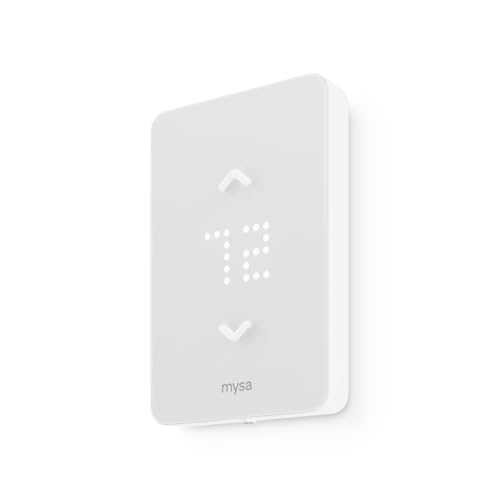
Mysa Lite Smart Thermostat for Baseboard Heaters
Best for: Electric baseboard heating with 240V support
- System Compatibility
- Electric baseboard, fan-forced, wall
- Voltage
- 120V or 240V
- Wiring Requirement
- 4 wires
- Smart Home Compatibility
- Apple HomeKit, Alexa, Google Home
- Programmability
- 7-day scheduling
- Connectivity
- 2.4 GHz WiFi
View on Amazon: Mysa Lite Smart Thermostat for Baseboard Heaters Affiliate link
The Mysa LITE is a 240V line-voltage thermostat designed for electric baseboard and fan-forced heaters. It connects via 2.4 GHz Wi-Fi and supports 7-day scheduling without a subscription. The unit requires four wires, including a neutral, and replaces single-pole or double-pole switches. It works with Apple HomeKit and Alexa. This model suits homeowners with standard electric radiant heating who want app control and geofencing.
Pros
- No monthly subscription required for core features
- Supports 120V or 240V line voltage
- Includes 5-year limited warranty
- Compatible with Apple HomeKit and Alexa
- Features 7-day scheduling and geofencing
Cons
- Requires four wires including a neutral
- Incompatible with 24V furnaces and central heat pumps
- Limited to electric baseboard and fan-forced systems
Good fit if
- You have electric baseboard or fan-forced heaters
- You want app control without a subscription
- You need 240V compatibility for radiant heat
Skip if
- You have a 24V furnace or central heat pump
- Your wall box only has two wires
- You need a thermostat for central HVAC systems
Verdict: Mysa LITE Electric Baseboard Thermostat is a practical choice for electric baseboard owners who need 240V support and app control without recurring fees. It fits homes with four-wire setups and standard electric radiant heating systems.
Specifications side by side
| Spec | Sensi Wi-Fi Smart Thermostat | Mysa Lite Smart Thermostat for Baseboard Heaters |
|---|---|---|
| System Compatibility | not stated | Electric baseboard, fan-forced, wall |
| Voltage | not stated | 120V or 240V |
| Wiring Requirement | C-wire not required | 4 wires |
| Smart Home Compatibility | Alexa | Apple HomeKit, Alexa, Google Home |
| Programmability | Flexible scheduling | 7-day scheduling |
| Connectivity | not stated | 2.4 GHz WiFi |
| Certification | Energy Star Certified | not stated |
| Dimensions | 3.75 × 5.88 × 1 inches | 2.48 × 4.65 × 6.02 inches |
| Weight | 13.6 ounces | not stated |
| Size | No Size | 2025 |
| Color | White | White |
| Model | ST55 | BB V2-0-L |
Frequently asked questions
Does the Sensi thermostat require a C-wire?
No, the Sensi ST55 is designed to work without a common wire in most applications. This feature simplifies DIY installation for users with standard HVAC setups. You can often install it using existing power sources from the system's low-voltage wiring. Check your specific HVAC configuration to ensure compatibility before purchasing.
What type of heating system does the Mysa Lite support?
The Mysa Lite is built specifically for electric baseboard heaters. It supports 240V line-voltage systems, making it suitable for radiant electric heating. It is not designed for central HVAC units like gas furnaces or central air. Ensure your home uses four-wire setups for standard electric baseboard compatibility.
Can I control both thermostats using voice commands?
Yes, both devices support Alexa for voice control. The Sensi ST55 integrates directly with Alexa for hands-free operation. The Mysa Lite also works with Alexa and adds compatibility with Apple HomeKit. This allows you to adjust temperatures using smart speakers or voice assistants in your home.
Which thermostat is better for a standard home HVAC system?
The Sensi ST55 is the better choice for standard HVAC systems. It is designed for low-voltage equipment like gas furnaces and central air. The Mysa Lite is intended for high-voltage electric baseboards. If you have a traditional heating and cooling setup, the Sensi will fit your needs without modification.
Do these thermostats require a subscription fee?
No, neither thermostat requires a recurring subscription fee for basic operation. The Mysa Lite explicitly offers app control without recurring charges. The Sensi ST55 provides scheduling and usage reports through its app without additional costs. You get full remote management capabilities directly through the manufacturer's software.
Are these thermostats Energy Star certified?
The Sensi ST55 is Energy Star certified, confirming it meets energy efficiency guidelines. This certification helps you track energy use and potentially reduce utility bills. The provided data does not list Energy Star certification for the Mysa Lite. You should verify specific efficiency claims for the Mysa model separately.
Can I program schedules on both devices?
Yes, both thermostats support flexible scheduling to manage energy use. The Sensi ST55 allows you to set custom temperature schedules via its app. The Mysa Lite is also programmable, letting you set specific times for your electric baseboard heater. These features help you maintain comfort while optimizing energy consumption.