Philips Hue Tap Dial Switch or Philips Hue Wireless Motion Sensor? Which Philips Hue Model to Buy
As an Amazon Associate we earn from qualifying purchases. Links on this page are affiliate links.
When you consider philips hue wall tap dial light vs motion sensor, you are choosing between manual control and automation. Both devices require a Hue Bridge and support Matter for smart home integration. The Tap Dial Switch offers four programmable buttons for instant scene selection, while the Motion Sensor automatically triggers lights based on movement. One lets you command your lights directly, and the other handles the task for you. Both attach wirelessly to walls or surfaces.
Key differences
| Aspect | Philips Hue Tap Dial Switch | Philips Hue Wireless Motion Sensor |
|---|---|---|
| Control Type | Four programmable buttons for manual scene selection | Motion detection for automatic light triggering |
| Power Source | One CR2032 battery | Two AAA batteries |
| Weight | 0.32 ounces | 2.75 ounces |
| Dimensions | 2.36 x 2.36 x 0.79 inches | 2.16 x 2.16 x 0.78 inches |
Which one should you choose?
Choose Philips Hue Tap Dial Switch if
- You want to manually select specific lighting scenes with the press of a button
- You prefer a lightweight device that mounts easily with adhesive or magnets
- You need immediate control over room zones without waiting for movement detection
Choose Philips Hue Wireless Motion Sensor if
- You want your lights to turn on automatically when you enter a room
- You prefer setting lights to adjust based on time of day and activity
- You want a sensor that can be placed anywhere using a magnetic mount or screw
Verdict: Choose the Tap Dial Switch if you value direct, manual control over your lighting scenes. Pick the Motion Sensor if you prefer hands-free automation that responds to your presence. Both devices integrate seamlessly with your Hue Bridge and Matter ecosystem.
Tap Dial Switch vs Motion Sensor
Control method
The Philips Hue Tap Dial Switch gives you direct manual control. You press one of four buttons to trigger scenes or adjust lighting in specific rooms. This is ideal for instant changes without reaching for your phone. The Philips Hue Wireless Motion Sensor works differently. It detects movement and automatically turns lights on or off. You do not touch it to change settings. It relies on sensors to decide when to act. If you want to manually set the mood, the Tap Dial is better. If you prefer lights that react to your presence, the Motion Sensor is the right choice.
Smart home compatibility
Both devices share the same core connectivity standards. Each product lists Matter support in its specifications. This means both the Tap Dial Switch and the Motion Sensor can integrate with smart home ecosystems that support the Matter protocol. You also need a Hue Bridge to unlock full features like remote control and advanced automations for either device. Neither device connects directly to Wi-Fi. They both rely on the Bridge for a stable connection. Since both offer identical compatibility with Matter and require the same Hub, there is no technical advantage for one over the other in this category.
Physical dimensions
The two devices differ significantly in size and shape. The Tap Dial Switch measures 2.36 inches in width and length, with a height of 0.79 inches. It is slightly larger and boxier. The Motion Sensor is more compact, measuring 2.16 inches in width and length, with a height of 0.78 inches. The Motion Sensor is also lighter, weighing 2.75 ounces compared to the Tap Dial Switch at 0.32 ounces. The smaller footprint of the sensor allows for more discreet placement in corners or ceilings. The switch is designed to be seen and touched on a wall.
Power source
The power requirements for these devices are quite different. The Tap Dial Switch comes with one CR2032 battery included. This small coin cell battery powers the buttons and wireless transmission. The Philips Hue Wireless Motion Sensor requires two AAA batteries. It does not include them in the box. AAA batteries are larger and typically last longer in motion sensors that transmit data frequently. However, you must purchase them separately. The Tap Dial includes its battery, making it ready to use immediately out of the box. You need to plan for buying batteries for the sensor.
Mounting options
Both devices offer flexible installation methods. The Tap Dial Switch uses an adhesive backing for wall mounting. You can also remove the dial from the plate to use it as a remote or stick it to magnetic surfaces. The Motion Sensor allows placement anywhere using a magnetic mount or a single screw. The sensor is designed to be placed in various locations to detect movement effectively. The switch is primarily a wall control but offers portable use. Both provide easy, tool-free or minimal-tool installation options for renters or homeowners.
Which Philips Hue device fits you
You want instant manual scene control
The Tap Dial Switch features four programmable buttons. You can assign specific scenes to each button for immediate access. Its compact 2.36-inch square design mounts easily to walls or sticks to magnetic surfaces. This setup allows you to adjust lighting without using an app or voice commands.
You prefer automatic motion-activated lighting
The Wireless Motion Sensor detects movement and triggers your lights automatically. It runs on two AAA batteries and mounts via magnet or screw. You can customize settings in the app to change light color and brightness based on the time of day. This creates a hands-free experience.
You need a portable remote control
The Tap Dial Switch includes a CR2032 battery and works as a portable remote. You can detach it from the wall plate and place it anywhere. This flexibility lets you control scenes from different rooms or locations. The device supports Matter and requires a Hue Bridge for full functionality.
The products compared

Philips Hue Tap Dial Switch
Best for: tactile scene control without wiring
- Hub Requirement
- Hue Bridge Required
- Wiring Requirement
- No-Wire Installation
- Application
- Lights
- Dimensions
- 2.36 × 2.36 × 0.79 inches
- Weight
- 0.32 ounces
View on Amazon: Philips Hue Tap Dial Switch Affiliate link
This portable wall switch gives you tactile control over your smart lights. It features four programmable buttons for instant scene selection and a wireless dial for dimming. The unit mounts with adhesive or sticks to magnetic surfaces. It requires a Hue Bridge for full automation and Matter compatibility. It suits users who want physical control without wiring.
Pros
- Four programmable buttons for preset scenes
- Wireless dial for dimming control
- Matter compatibility for smart home integration
- Portable design with adhesive or magnetic mounting
Cons
- Requires a Hue Bridge to function
- No built-in battery; uses CR2032 coin cell
- Limited to light control only
Good fit if
- You want physical buttons for quick scene changes
- You need a portable switch that does not require wiring
- You already have a Hue Bridge for automation
Skip if
- You do not have a Hue Bridge
- You need a switch with a built-in rechargeable battery
- You want to control devices other than lights
Verdict: Philips Hue Tap Dial Switch offers precise physical control for your lighting setup. It fits users who value tactile buttons and portable mounting over wired installations.
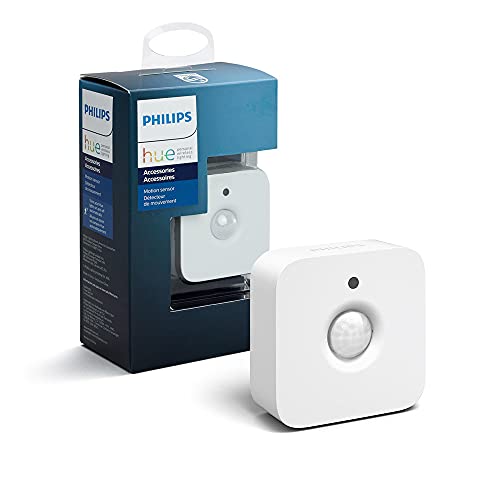
Philips Hue Wireless Motion Sensor
Best for: automatic lighting with movement detection
- Smart Home Compatibility
- Matter
- Switch Function
- Motion Sensor
- Application
- Lights
- Dimensions
- 2.16 × 2.16 × 0.78 inches
- Weight
- 2.75 ounces
View on Amazon: Philips Hue Wireless Motion Sensor Affiliate link
This Philips Hue Motion Sensor automates smart lights using movement detection. It requires a Hue Bridge for full functionality and supports Matter for secure, stable connections. The device is compact, measuring 2.16 by 2.16 inches with a height of 0.78 inches. It weighs 2.75 ounces and includes two AAA batteries. You can mount it wirelessly using a magnetic mount or a single screw. The Hue app lets you customize settings based on the time of day.
Pros
- Automatically turns on smart lights when movement is detected
- Supports Matter for secure, stable connection
- Wireless setup with magnetic mount or single screw
- Includes two AAA batteries
Cons
- Requires a Hue Bridge to function
- Battery-powered, requiring periodic replacement
- Limited to motion detection only
Good fit if
- You want automatic lighting based on movement
- You already have a Hue Bridge
- You prefer wireless installation options
Skip if
- You do not have a Hue Bridge
- You need a wired power source
- You want manual control only
Verdict: Philips Hue Wireless Motion Sensor is ideal for users who want automatic lighting based on movement and already have a Hue Bridge. It offers flexible installation and Matter support for a secure connection.
Specifications side by side
| Spec | Philips Hue Tap Dial Switch | Philips Hue Wireless Motion Sensor |
|---|---|---|
| Smart Home Compatibility | not stated | Matter |
| Hub Requirement | Hue Bridge Required | not stated |
| Wiring Requirement | No-Wire Installation | not stated |
| Switch Function | not stated | Motion Sensor |
| Application | Lights | Lights |
| Dimensions | 2.36 × 2.36 × 0.79 inches | 2.16 × 2.16 × 0.78 inches |
| Weight | 0.32 ounces | 2.75 ounces |
| Size | 1 Pack | No Size |
| Color | Black | white |
| Model | 57877 | 570977 |
Frequently asked questions
Does the Philips Hue Tap Dial Switch require wiring?
No, the Tap Dial Switch is designed for portable mounting without wiring. You can attach it to a wall or use its magnetic backing for flexible placement. This tactile control device fits users who prefer physical buttons over app-based adjustments or wired installations.
Can the Philips Hue Wireless Motion Sensor detect light levels?
The provided specifications do not list light level detection as a feature. The device focuses on automatic lighting based on movement detection. It is ideal for users who want their lights to turn on automatically when motion is sensed in a room.
Is the Tap Dial Switch compatible with Matter?
The product data does not explicitly confirm Matter support for the Tap Dial Switch. However, the Motion Sensor does support Matter for a secure connection. Both devices require a Hue Bridge to function within your smart home ecosystem.
How do I mount the Philips Hue Tap Dial Switch?
You can mount the Tap Dial Switch using its magnetic backing or by adhering it to a wall. The compact square design, measuring 2.36 inches on each side, allows for easy placement in various locations without the need for permanent wiring or complex setup.
What is the difference between the two models?
The Tap Dial Switch provides manual control via four programmable buttons for instant scene selection. The Motion Sensor offers automatic lighting activation based on movement. Choose the switch for direct tactile input and the sensor for hands-free automation in your space.
Does the Motion Sensor work without a Bridge?
No, the Philips Hue Wireless Motion Sensor requires a Hue Bridge to operate. It connects to the bridge to enable automatic lighting based on movement. This setup ensures flexible installation and secure integration with your existing smart home lighting system.
What are the dimensions of the Tap Dial Switch?
The Tap Dial Switch measures 2.36 inches in width and length, with a height of 0.79 inches. It weighs only 0.32 ounces. These compact dimensions make it a discreet option for wall mounting or magnetic attachment near your lighting controls.
Can I use the Motion Sensor in any room?
Yes, the Motion Sensor offers flexible installation options for various rooms. It detects movement to trigger automatic lighting, making it suitable for hallways, bathrooms, or entryways. Ensure your Hue Bridge is connected to enable these automated features throughout your home.