Google Nest Temperature Sensor (2nd vs Google Nest Wireless Temperature Sensor (2026): Key Differences
As an Amazon Associate we earn from qualifying purchases. Links on this page are affiliate links.
This guide compares the google nest temperature sensor vs nest temperature sensor. Both devices help you manage room comfort by sending temperature data to compatible thermostats. They share similar mounting options and app control. The main differences lie in their connectivity technology, battery longevity, and physical dimensions. You can use either sensor to prioritize specific rooms. Understanding these specs helps you pick the right fit for your home layout.
Key differences
| Aspect | Google Nest Temperature Sensor (2nd Gen) | Google Nest Wireless Temperature Sensor |
|---|---|---|
| Connectivity | Not listed | Bluetooth Low Energy |
| Battery Life | Up to 3 years | Up to 2 years |
| Dimensions | 2.18 x 2.18 x 0.85 inches | 1.9 x 1.9 x 0.8 inches |
| Weight | 1.31 ounces | 1.6 ounces |
| Control Method | Google Home or Nest app | Nest app |
Which one should you choose?
Choose Google Nest Temperature Sensor (2nd Gen) if
- You want a sensor with a longer battery life that lasts up to three years
- You prefer a slightly lighter device that is easier to mount on walls or shelves
- You want to control the sensor using either the Google Home or Nest app
Choose Google Nest Wireless Temperature Sensor if
- You need explicit Bluetooth Low Energy connectivity for your setup
- You want to prioritize temperature in up to six rooms with a compatible thermostat
- You prefer a sensor with a more compact, square footprint
Verdict: The Google Nest Temperature Sensor (2nd Gen) is the better choice if you value longer battery life and flexible app control. The original Google Nest Wireless Temperature Sensor suits you if Bluetooth Low Energy connectivity is a priority for your network. Both devices effectively manage room comfort when paired with compatible thermostats.
Nest Sensor 2nd Gen vs Original
Connectivity technology
The Google Nest Temperature Sensor (2nd Gen) does not list its specific wireless protocol in the provided data. In contrast, the Google Nest Wireless Temperature Sensor uses Bluetooth Low Energy for its connection. This standard allows the original sensor to maintain a reliable link with your compatible thermostat without requiring a separate hub. You benefit from knowing the exact method used for data transmission with the older model. The 2nd Gen device omits this technical detail, leaving its communication method unspecified in the current specifications.
Battery longevity
Battery life is a key factor for maintenance frequency. The Google Nest Temperature Sensor (2nd Gen) offers a battery life of up to three years. The Google Nest Wireless Temperature Sensor runs on a CR2 3V lithium battery with a stated lifetime of up to two years. You will need to replace batteries less often with the newer model. This three-year span provides greater convenience for wall-mounted units that are difficult to reach. The original sensor requires more frequent attention over its operational life.
System compatibility
Both sensors support the same core thermostats. The Google Nest Temperature Sensor (2nd Gen) works with the Nest Learning Thermostat (4th Gen), Nest Learning Thermostat (3rd Gen), and Nest Thermostat E. The Google Nest Wireless Temperature Sensor is compatible with the Nest Learning Thermostat (3rd Gen) and Nest Thermostat E. The 2nd Gen model adds support for the 4th Generation Nest Learning Thermostat. If you own the latest learning thermostat, the newer sensor is required. Otherwise, both function identically with older compatible units.
Range specifications
Placement flexibility depends on wireless range. The Google Nest Wireless Temperature Sensor specifies a range of up to 50 feet, allowing for easy placement in various rooms. The Google Nest Temperature Sensor (2nd Gen) does not list a specific wireless range in its published data. You cannot verify if the newer model matches or exceeds the 50-foot capability of the original. For long-distance installations, the original sensor provides a confirmed distance metric that the 2nd Gen lacks in its current specifications.
Physical dimensions
Size matters for discreet mounting. The Google Nest Temperature Sensor (2nd Gen) measures 2.18 inches in width and length, with a height of 0.85 inches. The Google Nest Wireless Temperature Sensor measures 1.9 inches in width and length, with a height of 0.8 inches. The 2nd Gen model is slightly larger in footprint and thickness. The original sensor is more compact and may be less noticeable on a wall or shelf. You might prefer the smaller form factor of the original for tighter spaces or cleaner aesthetics.
Which Google Nest Sensor Should You Buy
You want the longest battery life possible
The 2nd Gen model offers a battery life of up to three years. This is one year longer than the original sensor's two-year lifespan. You benefit from less frequent battery replacements. The device uses a standard battery source. This extended duration makes it ideal for hard-to-reach locations. You save time on maintenance while maintaining consistent temperature monitoring in your home.
You need confirmed wireless connectivity specs
The original Wireless Temperature Sensor explicitly lists Bluetooth Low Energy connectivity. This clear specification helps you understand how the device communicates with your thermostat. It also notes a fifty-foot range for flexible placement. If you prefer known protocols and verified range data over the newer model's unspecified connection, this option provides that transparency in its technical details.
You prefer a smaller physical footprint
The original sensor is slightly more compact in width, measuring 0.8 inches compared to the 2nd Gen's 2.18 inches. Its height is 1.9 inches versus 0.85 inches for the newer version. The 2nd Gen is shorter but wider. If you have limited wall space or prefer a slimmer profile, the original model's specific dimensions might fit your mounting area better without protruding as much.
The products compared

Google Nest Temperature Sensor (2nd Gen)
Best for: targeted room comfort scheduling
- Accessory Type
- Room temperature sensor
- System Compatibility
- Nest Learning (3rd/4th Gen), Nest E
- Power Source
- Battery (up to 3 years)
- Sensor Functions
- Temperature
- Mounting Type
- Wall, shelf
- Control Method
- Google Home or Nest app
View on Amazon: Google Nest Temperature Sensor (2nd Gen) Affiliate link
The Google Nest Temperature Sensor (2nd gen) is a white, battery-powered room sensor designed to eliminate hot and cold spots. It measures temperature and syncs with the Google Home or Nest app for scheduling. The device runs on a single battery for up to three years and fits on walls or shelves. You can use up to six sensors to prioritize one room or average temperatures across spaces like bedrooms. It works with Nest Learning Thermostats (3rd and 4th gen) and the Nest Thermostat E.
Pros
- Battery lasts up to 3 years
- Supports up to 6 sensors per system
- Control via Google Home or Nest app
- Compatible with Nest Learning (3rd/4th Gen) and Nest E
Cons
- No built-in display for manual reading
- Requires app for all configuration and scheduling
- Only measures temperature, not humidity
Good fit if
- You have cold spots in specific rooms
- You want to schedule temperatures by room
- You use a Nest Learning or Nest E thermostat
Skip if
- You need humidity monitoring
- You want a thermostat with a built-in screen
- You do not use the Google Home or Nest app
Verdict: Google Nest Temp Sensor 2nd Gen provides reliable temperature data for rooms your main thermostat cannot reach. It fits buyers who want precise scheduling via the app and have compatible Nest thermostats.
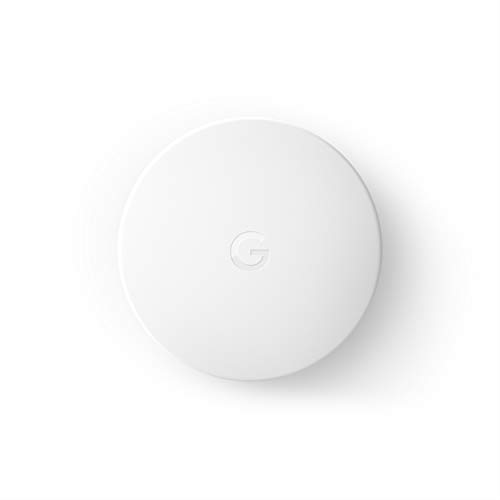
Google Nest Wireless Temperature Sensor
Best for: Prioritizing room-specific temperature control
- Accessory Type
- Temperature sensor
- System Compatibility
- Nest Learning 3rd Gen, Nest E
- Power Source
- CR2 3V lithium battery
- Connectivity
- Bluetooth Low Energy
- Sensor Functions
- Temperature
- Mounting Type
- Wall, shelf
View on Amazon: Google Nest Wireless Temperature Sensor Affiliate link
This wireless sensor connects to compatible Nest thermostats via Bluetooth Low Energy to report room temperatures. It runs on a single CR2 3V lithium battery with a two-year lifespan. You can place it on a shelf or mount it on a wall. The sensor allows you to prioritize specific rooms in the Nest app, ensuring your thermostat targets the space that matters most to you.
Pros
- Bluetooth Low Energy wireless connection
- Up to 2-year battery life
- Works with Nest Learning Thermostat and Nest Thermostat E
- Wall or shelf mounting options
- Prioritize room temperature in Nest app
Cons
- Limited to Bluetooth Low Energy range
- Requires compatible Nest thermostat
- Battery replacement needed every two years
Good fit if
- You want to prioritize temperature in a specific room
- You already own a compatible Nest thermostat
- You prefer wireless placement without wiring
Skip if
- You do not have a compatible Nest thermostat
- You need multi-sensor humidity tracking
- You require Wi-Fi direct connectivity
Verdict: Google Nest Temperature Sensor is a simple, battery-powered add-on for compatible Nest thermostats. It fits users who need precise temperature control in specific rooms without complex wiring.
Specifications side by side
| Spec | Google Nest Temperature Sensor (2nd Gen) | Google Nest Wireless Temperature Sensor |
|---|---|---|
| Accessory Type | Room temperature sensor | Temperature sensor |
| System Compatibility | Nest Learning (3rd/4th Gen), Nest E | Nest Learning 3rd Gen, Nest E |
| Power Source | Battery (up to 3 years) | CR2 3V lithium battery |
| Connectivity | not stated | Bluetooth Low Energy |
| Sensor Functions | Temperature | Temperature |
| Mounting Type | Wall, shelf | Wall, shelf |
| Control Method | Google Home or Nest app | Nest app |
| Dimensions | 2.18 × 2.18 × 0.85 inches | 1.9 × 0.8 × 1.9 inches |
| Weight | 1.31 ounces | 1.6 ounces |
| Size | Pack of 1 | 1 count |
| Color | White | White |
| Model | 10807 | T5000SF |
Frequently asked questions
Which sensor is smaller and easier to hide?
The Google Nest Wireless Temperature Sensor has a more compact footprint. Its dimensions are 0.8 inches wide by 1.9 inches high. The 2nd Gen model is slightly larger at 2.18 inches wide. You might prefer the slimmer design for discreet wall mounting in visible areas.
Do both sensors work with the same thermostats?
Yes, both devices function as add-ons for compatible Nest thermostats. They send temperature data to help your main unit adjust heating or cooling. The 2nd Gen targets precise scheduling, while the original focuses on room-specific control. Check your thermostat compatibility before purchasing either option.
How do the weights compare between the two models?
The 2nd Gen sensor is lighter than the original. It weighs 1.31 ounces, while the Wireless Temperature Sensor weighs 1.6 ounces. The difference is minimal, but the lighter unit may feel less substantial on the wall. Both are battery-powered and easy to handle during installation.
What is the difference in packaging quantity?
The 2nd Gen comes in a pack of one unit. The original Wireless Temperature Sensor is listed as a single count. Both are sold individually. You will need to purchase multiple units if you want to monitor temperature in several different rooms throughout your home.
Which model has the newer model number?
The 2nd Gen carries the model number 10807. The original Wireless Temperature Sensor uses the model number T5000SF. The higher number indicates the newer generation of the product. This distinction helps you identify the correct device when searching for replacement batteries or mounting hardware.
Can I use these sensors for targeted room comfort?
Yes, both sensors enable targeted comfort scheduling. The 2nd Gen is explicitly noted for this feature. The original sensor also provides room-specific temperature data to your thermostat. You can use either device to ensure specific rooms stay at your preferred temperature, independent of other areas.